In this article
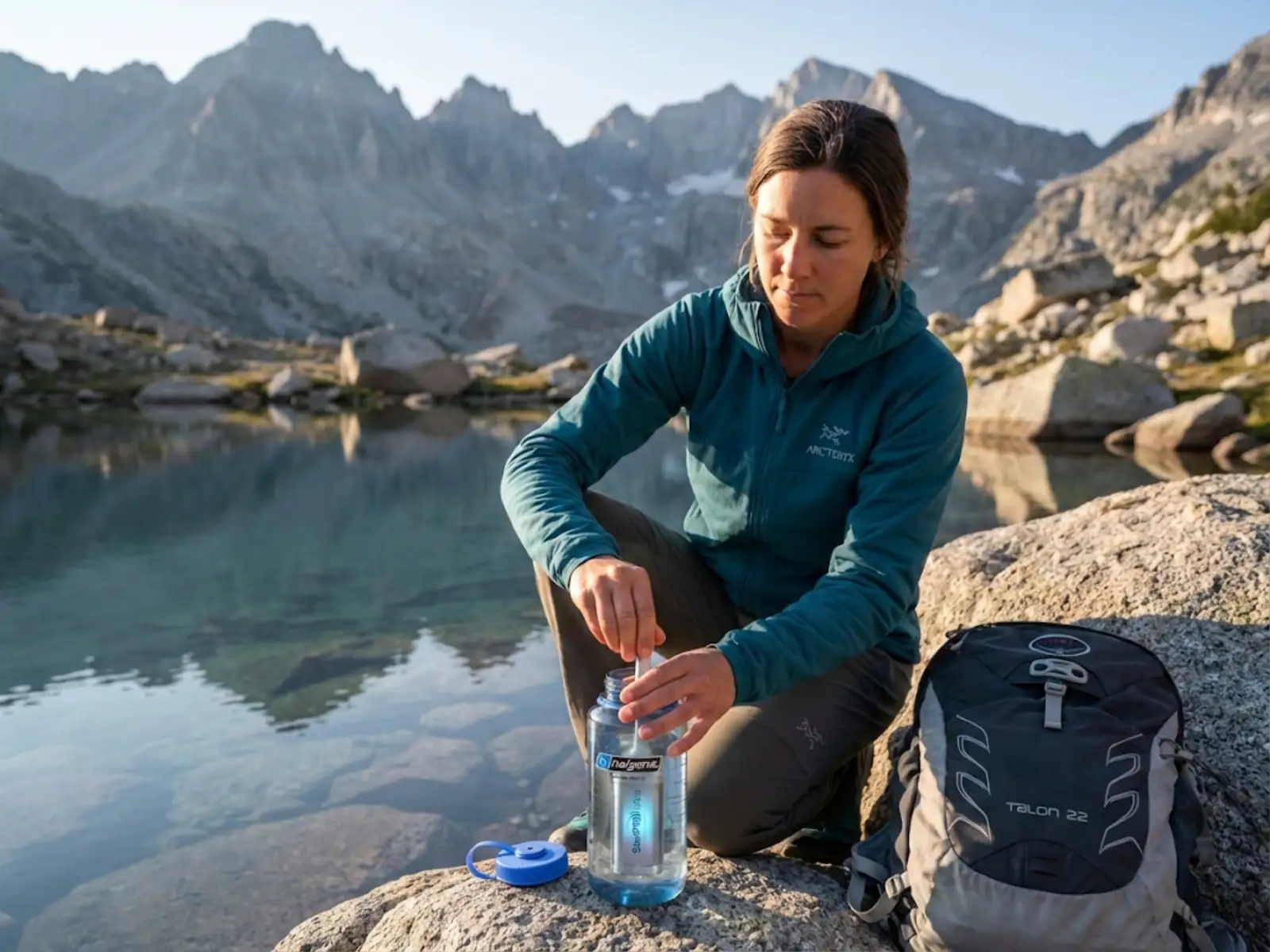
The alpine lake looked pristine—crystalline water reflecting the granite peaks above. I dipped my SteriPEN Ultra into my Nalgene, hit the button, and watched… nothing. The screen flickered once, then died. At 11,000 feet on the John Muir Trail with my pack weight stripped to 18 pounds, those “dead” lithium-ion cells meant drinking untreated water or hiking three hours back to the last reliable source.
Any experienced hiker who relies on UV water purifiers has faced some version of this moment. After carrying UV light devices across thousands of miles—from the Pacific Crest Trail to the Continental Divide Trail—I’ve learned that the technology is remarkable when it works and absolutely useless when it doesn’t.
This guide unpacks the real-world battery challenges of ultraviolet water purification, explains when UV technology makes strategic sense versus when it becomes a liability, and provides field-tested protocols to maximize reliability in conditions that kill batteries.
⚡ Quick Answer: UV water purifiers effectively neutralize viruses, bacteria, and protozoa in about 90 seconds, but they require clear water and functional batteries. The “battery problem” occurs when cold temperatures cause voltage droop in alkaline cells, making devices fail even with 40% charge remaining. The solution: use primary lithium AA batteries below 40°F, store devices in interior jacket pockets, and always carry chemical backup like Aquamira or Micropur tablets.
The Science Behind UV Water Purification

UV-C light at the 253.7nm wavelength does something mechanical filters cannot: it neutralizes viruses. When that invisible light hits a pathogen, it’s absorbed by the DNA bases, creating physical “bulges” called thymine dimers. The microbe doesn’t die in the traditional sense—it’s rendered biologically incapable of causing infection.
This distinction matters. The pathogen is still physically present in your purified water—it just can’t hurt you. That’s why the 0.1-micron filter limitation for viruses is such a problem for travelers: enteric viruses like norovirus average 20-30nm in diameter, passing straight through standard hollow-fiber membranes. Ultraviolet water purifiers solve this elegantly.
The EPA’s “purifier” certification requires 99.9999% bacteria reduction, 99.99% virus reduction, and 99.9% protozoa reduction. Modern SteriPEN brand purifiers and Katadyn devices meet these standards in clear water according to NIH research—a critical caveat we’ll address shortly.
Pro tip: Store UV-treated water in opaque containers or drink within 2 hours. A phenomenon called photoreactivation allows some bacteria to repair DNA damage when exposed to visible light—wrap your bottle in a dark buff after treatment.
The Battery Problem: Why UV Fails When You Need It Most
Here’s what gear reviews won’t tell you: the “Battery Problem” isn’t about capacity—it’s about chemistry.
Mercury vapor lamps require high “strike voltage” to ignite. This momentary current spike taxes whatever battery chemistry is powering your device. When temperatures drop toward freezing, alkaline batteries (using potassium hydroxide electrolyte) lose ionic mobility. The internal resistance increases, and the voltage “droops” below the device’s operating threshold even if the battery retains 40% of its energy.
I’ve watched this happen countless times on shoulder-season trips. The SteriPEN shows a red error light. The hiker assumes dead batteries and frantically digs for replacements. The fresh alkaline cells produce the same result.
Primary lithium batteries (Li-FeS2) use a non-aqueous electrolyte that remains fluid and conductive down to -40°F. They also maintain a flat discharge curve—stable 1.5V output until near-empty. For keeping your hydration system from freezing in winter conditions, switching battery chemistry is more important than any insulation sleeve.
The USB rechargeable devices like the SteriPEN Ultra provide roughly 50 treatments per charge. But internal lithium-ion batteries are vulnerable to “cold-soaking” if left in your pack overnight at sub-freezing temperatures. The solution is simple: sleep with your UV purifier in your sleeping bag. Body heat is free battery insurance.
The Clarity Requirement: When UV Becomes Unreliable
A common misconception: water must look “muddy” for UV to fail. Reality is more nuanced.
UV Transmittance (UVT) measures the percentage of 254nm light passing through one centimeter of water. Water that looks clear to your eye may contain dissolved organic carbons, humic acids (tannins), or minerals like iron and manganese that absorb UV before reaching pathogens at the bottle’s edge.
The “Shadow Effect” is worse. When pathogens attach to or hide behind silt particles, those particles physically shield bacteria from UV radiation. This is why stirring during treatment isn’t optional—it ensures every water volume passes through the “kill zone” adjacent to the quartz sleeve.
I use the “thumb test” in the field: submerge your thumb in the water. If you can’t clearly see your thumbnail through three inches, don’t trust UV alone. Desert hikers dealing with cow tanks and silty water sources should pre-filter turbid water before treatment using a bandana, coffee filter, or dedicated mesh strainer.
Thread contamination is the hidden failure mode nobody warns you about. When you submerge a bottle to fill it, the threads where the cap screws on contact untreated water. The UV lamp only treats water inside the bottle volume. When you drink, “purified” water flows over “contaminated” threads. Dry the threads thoroughly before drinking, or use a two-bottle system.
Pro tip: If you’re treating tannic, tea-colored water from leaf decomposition, UV transmittance is compromised even if the water looks “clear enough.” Add a chemical backup strategy for these sources.
UV vs. Filters vs. Chemicals: The Decision Matrix
The filter vs. purifier distinction matters here. Filters physically remove pathogens based on size. Purifiers neutralize everything—including viruses that defeat mechanical filtration. UV and chemicals are purifiers; the Sawyer Squeeze and MSR Guardian are filters (though the Guardian adds a purifier membrane).
When UV wins:
The 90-second treatment speed advantage is massive. Aquamira requires 15-30 minutes; iodine needs 30+ minutes. For solo hikers treating 1-2 liters at a time from pristine alpine sources, UV is unbeatable for speed and weight. A SteriPEN Ultra weighs 2.6 ounces and fits in a hip belt pocket.
UV light also provides the only filter-free protection against norovirus and Hepatitis A for international travelers where water quality is questionable. Unlike iodine or chlorine dioxide, UV adds nothing to water flavor.
When UV fails:
Group logistics crush UV efficiency. Treating 12 liters per day for a family of four means 12+ minutes of active stirring versus gravity filter passivity. Most backcountry water sources require filtration regardless—silty snowmelt, desert stock ponds, and murky streams defeat UV’s clarity requirement.
There’s also the “zero residual” problem. Unlike chlorine, UV doesn’t protect stored water from recontamination over hours. If you treat a liter in the morning and drink from it all afternoon, bacterial regrowth can occur—especially in warm conditions with biofilm developing on bottle walls and threads.
The smartest setup I’ve seen on long trails: primary UV water purifier for speed and virus protection, plus six Aquatabs in the first aid kit for emergencies. Combined weight stays lower than a traditional pump filter, with redundancy against electronic failure.
Field Protocols: Maximizing UV Reliability
Cold-Weather Protocol
Store your device in an interior jacket pocket—maintain above 50°F if possible. Before treating, warm batteries in your hands for 30 seconds if the device was cold-exposed. Use primary lithium AAs exclusively below 40°F; alkaline will fail.
If treating near-freezing cold water, pre-warm the bottle slightly: hold it against your body for 2-3 minutes. Return the device to your warm pocket immediately after treatment—don’t leave it sitting on snow or cold ground.
Turbid Water Protocol
Step 1: Assess clarity with the thumb test. Step 2: Pre-filter through bandana, coffee filter, or mesh. Step 3: Let settle 15-30 minutes if still hazy. Step 4: Decant clear water to treatment bottle; leave sediment behind. Step 5: UV treat with continuous stirring. Step 6: Dry threads before sealing.
If water fails the clarity test after settling, switch to chemical treatment. Chlorine dioxide works in cloudy water; iodine does not.
Night Treatment Protocol
Use your headlamp’s red-light mode to preserve night vision. Pre-fill bottles at dusk when you can properly assess water clarity. Keep your UV device in your sleeping bag overnight for morning treatment.
The UV glow is visible from distance—be aware if stealth camping. Treatment inside your tent vestibule works, but keep the bottle stable on a flat surface.
Pro tip: Wrap a few layers of duct tape around your SteriPEN handle. It provides grip for cold hands and serves as an emergency repair kit.
Total Cost of Ownership: The 5-Year Reality Check
The SteriPEN Ultra runs about $90 with an 8,000-treatment lamp lifespan—roughly $0.01 per liter plus negligible electricity if you’re already carrying a power bank. The Katadyn BeFree and Sawyer Squeeze cost $35 with functionally unlimited treatment capacity and zero operating cost.
For AA-powered devices like the SteriPEN Classic, the math shifts. Primary lithium AA batteries cost $6-8 per four-pack and treat roughly 50 liters. A thru-hiker processing 2,000 liters per year spends over $300 on batteries across five seasons.
Chemical treatment (Aquamira drops at $15 per 120-liter set) scales poorly: treating 2,000 liters annually means $250 per year, $1,250 over five years.
The breakeven analysis: USB-rechargeable UV beats chemicals at around 500 liters yearly usage but never competes with hollow-fiber water filters on pure cost. What UV offers is the weight-adjusted peace of mind for virus protection—something no sub-one-pound filter delivers.
For weekend warriors treating under 50 liters monthly, chemical tablets are most economical. For thru-hikers treating 100-200 liters monthly, USB rechargeable UV plus tabs backup wins the weight-cost-reliability triangle.
Conclusion
UV works—when it works. The science is sound for clear water: 90 seconds of 254nm light reliably neutralizes viruses, bacteria, and protozoa that pass through hollow-fiber filters. But batteries fail, turbidity shields pathogens, and no electronic device deserves blind trust in the backcountry.
Battery management is the skill. Primary lithium cells for cold conditions, body-warmth storage, and pre-trip testing eliminate 90% of UV failures. The device doesn’t fail you—cold chemistry and dead cells do.
Carry a backup system. The smartest UV water purifier users aren’t purists. They carry six Aquatabs or a 2oz bottle of Aquamira as insurance against the morning when the screen flickers and dies.
Next time you’re at a trailhead with a SteriPEN in your pack, ask yourself three questions: Can you see your thumbnail through three inches of that water? Is your device warm in your pocket? Do you have chemical backup in your first aid kit? Answer yes to all three, and UV becomes the fastest, lightest virus protection backcountry hydration has ever seen.
According to CDC guidelines for water treatment while hiking and camping, UV purification is an effective method when used properly on clear water sources, and should be combined with filtration for turbid water.
FAQ
Do UV water purifiers need batteries?
Yes—portable UV purifiers require either internal lithium-ion batteries (rechargeable via USB) or replaceable AA or CR123 cells. The SteriPEN Ultra provides approximately 50 one-liter treatments per USB charge. Primary lithium AAs perform best in cold conditions, functioning reliably to -40°F where alkaline batteries fail.
Can you use a UV purifier on cloudy water?
Not reliably. UV light requires clear water with high UV transmittance to reach all pathogens. Suspended sediment creates shadows protecting microbes from the UV dose. Pre-filter turbid water through a bandana or mesh, then let it settle before treatment.
Is UV purification better than filtering?
Neither is universally better. UV kills viruses that pass through 0.1-micron filters but requires clear water, batteries, and provides no particle removal. Filters remove protozoa and bacteria mechanically without power but miss viruses. Many experienced hikers carry both systems.
How long does a SteriPEN last?
The UV lamp has a rated lifespan of approximately 8,000 treatments—enough for years of recreational use. Real-world lifespan depends on drop damage (quartz glass is fragile), battery stress, and storage conditions. Test your device before every trip.
Do I need a filter if I have a UV purifier?
For most backcountry water sources, yes. UV requires clear water to function effectively. A lightweight pre-filter removes sediment that would otherwise shield pathogens. In high-alpine or spring-fed areas with pristine sources, standalone UV can work—but filtration backup protects against unexpected turbidity.
Risk Disclaimer: Hiking, trekking, backpacking, and all related outdoor activities involve inherent risks which may result in serious injury, illness, or death. The information provided on The Hiking Tribe is for educational and informational purposes only. While we strive for accuracy, information on trails, gear, techniques, and safety is not a substitute for your own best judgment and thorough preparation. Trail conditions, weather, and other environmental factors change rapidly and may differ from what is described on this site. Always check with official sources like park services for the most current alerts and conditions. Never undertake a hike beyond your abilities and always be prepared for the unexpected. By using this website, you agree that you are solely responsible for your own safety. Any reliance you place on our content is strictly at your own risk, and you assume all liability for your actions and decisions in the outdoors. The Hiking Tribe and its authors will not be held liable for any injury, damage, or loss sustained in connection with the use of the information herein.
Affiliate Disclosure: We are a participant in the Amazon Services LLC Associates Program, an affiliate advertising program designed to provide a means for us to earn advertising fees by advertising and linking to Amazon.com. As an Amazon Associate, we earn from qualifying purchases. We also participate in other affiliate programs and may receive a commission on products purchased through our links, at no extra cost to you. Additional terms are found in the terms of service.