

In this article
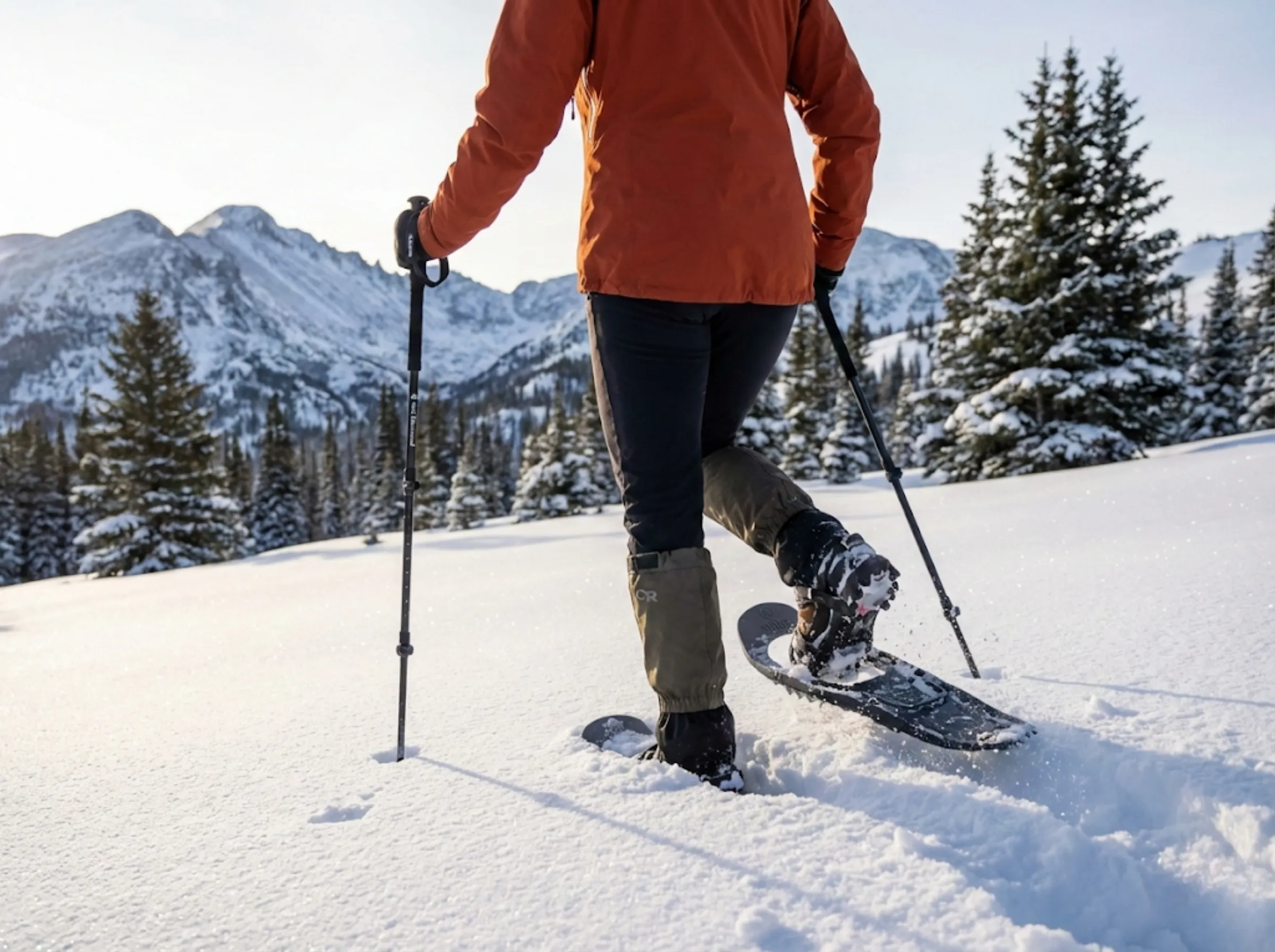
The snow was thigh-deep and still falling when I heard the first squelch inside my boot. That unmistakable gurgle of freezing meltwater channeling past the cuff and into my sock—the sound of a gaiter that wasn’t up to the job. Three miles from the trailhead in Colorado backcountry, wet feet weren’t just uncomfortable. They were the first domino in a cascade toward frozen toes.
After fifteen years of breaking trail through Rocky Mountain powder, I’ve tested dozens of gaiters—and watched most of them fail in the exact conditions they claimed to handle. Here’s what I’ve learned about what actually works when the snow gets serious.
⚡ Quick Answer: For deep powder snowshoeing (18+ inches), you need knee-high gaiters with a minimum 18-inch height, Velcro closures instead of zippers, and abrasion-resistant lower sections. The Outdoor Research Crocodile Classic remains the industry benchmark—zippers freeze and fail, while Velcro stays functional even when clogged with ice.
Why Deep Powder Demands More From Your Gaiters

Standard hiking gaiters exist to keep trail debris out of your boots. A few pebbles, some pine needles, maybe an occasional mud splash. Deep powder snowshoeing is an entirely different animal. The snow isn’t passive—it’s actively trying to infiltrate every seal point, every gap, every weakness in your gear.
When you’re postholing through fresh powder—that brutally exhausting process of your leg sinking past boot height with every step—the downward pressure forces snow against your gaiters like water through a compromised dam. If your gaiter’s top hem sits below the snow surface when you step, you’re not wearing gaiters. You’re wearing funnels.
The market for waterproof gaiters splits into three categories: trail running (low profile, not waterproof), hiking (mid-height, moderate protection), and mountaineering/expedition (full-height, bombproof construction). For deep snow conditions, only that third category offers real solutions.
Here’s the number that matters: 18 inches. That’s the height that reaches your tibial tuberosity (just below the knee) and places the top closure above the average depth of a snowshoe stride in fresh drift. Anything shorter, and you’re gambling with wet socks on every deep step.
Pro tip: If you’re shopping for winter gaiters, measure from the ground to just below your kneecap while wearing your snowshoeing boots. That’s your minimum gaiter height for serious powder.
The Contenders: Breaking Down What Actually Matters
Let’s cut through the marketing speak and look at what separates knee-high gaiters that actually work from gear that fails when the powder gets real.
Outdoor Research Crocodile Classic
The Outdoor Research Crocodile Classic is widely considered the industry benchmark for expedition gaiters—and for good reason. At 18 inches, it clears the height threshold that matters. But the specs tell only part of the story.
The lower section uses 1000D CORDURA nylon—essentially luggage-grade fabric. This isn’t marketing fluff; it’s the material spec that determines whether your gaiters survive crampon strikes, snowshoe deck abrasion, and hidden rocks. The upper section switches to GORE-TEX 3L membrane bonded to 70-denier nylon, placing breathability where you need it and armor where abuse happens.
The closure matters more than most people realize. The Crocodile uses hook-and-loop (Velcro) instead of a zipper. I’ll explain why that’s critical in a moment.
For the instep strap—the piece that takes the most abuse—Outdoor Research uses BioThane webbing, a PVC-coated polyester that won’t absorb water, won’t freeze rigid, and refuses to accumulate snowballs under your boot.
Kahtoola LEVAgaiter Tall GTX
The Kahtoola LEVAgaiter Tall GTX represents the fast-and-light philosophy pushed to its extreme. At roughly half the weight of the Crocodile, it’s tempting for weight-conscious hikers.
But here’s the catch: despite the “Tall” designation, it measures 13.5 inches. That’s a 4.5-inch deficit compared to the Crocodile—and in deep powder, those missing inches often represent the margin between dry shins and snow breaching your cuff during a deep posthole step.
The LEVAgaiter uses an AquaGuard zipper instead of Velcro. It creates a streamlined profile, but introduces a mechanical failure point I’ve seen play out on too many winter trips. The DuraLink TPU instep strap is durable—until extreme cold makes it brittle.
The Also-Rans
The Black Diamond Frontpoint is engineered for vertical ice climbing, not snowshoeing. Its narrow tailoring prevents crampon snagging but may not accommodate bulky winter hiking boots.
The REI Co-op Traverse offers a more affordable alternative with similar specs to the Crocodile—14-16.75″ height, 1000D nylon lower—but uses a proprietary laminate instead of GORE-TEX.
Low-cut trail gaiters like the REI Flash (7 inches)? Functionally useless in deep snow. They sit below the snowline, channeling powder directly into your boots.
Velcro vs. Zipper: The Closure That Could Save Your Trip
Here’s where gear selection becomes survival math. The closure mechanism on your gaiters isn’t a convenience feature—it’s a potential failure point that can end your trip.
Zippers rely on precise interlocking of small metal teeth. In warm, dry conditions, they work beautifully. In freezing conditions with ice, mud, and condensation? Not so much.
When water seeps into a zipper and freezes, the slider seizes. Forceful manipulation often cracks the slider body or snaps the pull tab entirely. And if your calf muscles swell during a steep ascent (which they will), the lateral stress can pop the teeth apart—what field reports call “zipper separation.”
Pro tip: Listen to polar explorer Eric Larsen: “I tell you why I don’t use gaiters with zippers.” If it’s not reliable enough for the Arctic, it’s not reliable enough for serious powder days.
Hook-and-loop (Velcro) doesn’t have these problems. A wide Velcro strip remains functional even when clogged with ice or mud. You can clear it by banging or scraping. A broken zipper? That’s “terminal in the field”—you’re done, and your feet are getting wet.
The consensus among snowshoeing gear fundamentals experts is clear: for deep, wet snow or multi-day winter adventures, Velcro offers superior reliability over zippers.
The Hidden Risk: When Your Gaiter Becomes a Tourniquet
Here’s something most gear guides completely ignore—and it can cost you your toes.
Your lower leg contains muscle compartments bound by fascia. During high-output activities like postholing through deep powder, your calf muscles engorge with blood. A non-elastic gaiter strapped tightly around the calf can act as a tourniquet, restricting peripheral blood flow to your feet.
The Wilderness Medical Society frostbite prevention guidelines explicitly flag “constrictive clothing” as a risk factor for cold injury. Even mild constriction of the calf reduces the volume of warm blood reaching your toes. In freezing conditions, this artificially induced restriction significantly lowers your threshold for frostbite.
The symptoms can mimic compartment syndrome: pain, numbness, and that alarming “foot drop” feeling. The gear meant to protect you becomes a liability.
The fix is simple but critical: prioritize gaiters with adjustable top closures (like the cam buckle on the Crocodile) over simple elastic bands. And loosen your gaiters during rest breaks to restore full circulation. Check out our guide to winter hiking safety fundamentals for more on managing cold-weather risks.
Pro tip: The most effective gaiter is one that’s loose enough to maintain circulation but tall enough to breach the snow surface. If your toes go numb and your gaiters are cranked tight, loosen them first.
The Compatibility Problem: Snowshoe Bindings vs. Gaiter Bulk
Here’s a real-world failure mode that never makes it into gear reviews: the physical clash between your gaiters and your snowshoe bindings.
If you’re using MSR Lightning Ascent snowshoes—one of the most popular models on the market—be warned. The binding strap placement often aligns directly with the buckle or reinforced lower section of high-volume gaiters like the Outdoor Research Crocodile.
This interference creates two problems. Either the binding can’t tighten securely, leaving your snowshoe loose and slipping. Or the rigid plastic of the binding presses the gaiter buckle into your ankle bone, creating bruising that makes every step painful.
The fix? Bring your snowshoes to the store when testing gaiters. Strap on the full system and check for clearance. Low-profile gaiters like the Kahtoola may interface better with complex bindings—which could justify the height sacrifice if you’re running specific snowshoe models. Understanding traction device compatibility extends beyond crampons to your full winter footwear system.
The Sweat Paradox: Waterproof Doesn’t Mean Dry
Here’s the uncomfortable truth nobody tells you: your feet are going to get wet. The question is how they get wet.
The paradox of waterproof gaiters is simple—the better they are at keeping snow out, the better they are at keeping sweat in. Even with “breathable” membranes like GORE-TEX 3L, the moisture vapor transmission rate is often outpaced by the sweat rate of a hiker working hard in deep snow.
Field reports confirm it: “A watertight solution keeps water out, but traps in sweat… there is no avoiding wet socks.”
So reframe your expectations. External snow melt is near-freezing—dangerous. Internal sweat is body temperature—manageable. The goal shifts from “dry legs” to “warm wetness” versus “freezing wetness.”
Think of your gaiter as part of a vapor barrier system for your leg. Accept that the inner environment will be damp, but prioritize keeping that freezing external meltwater out. Your winter layering strategies should account for this moisture reality from the start.
Making Your Choice: The Decision Framework
Let me simplify the decision for you. Match your gaiter to your snow depth:
For 18+ inch powder (deep backcountry conditions): Outdoor Research Crocodile Classic or equivalent 18-inch height, Velcro closure, BioThane strap. No compromises.
For 12-14 inch powder (moderate conditions): Kahtoola LEVAgaiter Tall GTX is acceptable if weight is your top priority. Understand the height and zipper tradeoffs.
For packed trails with occasional drifts: Mid-height options work. But if conditions might deteriorate, carry the tall gaiters anyway.
The feature priority stack, in order:
- Height first — 18″ minimum for serious powder
- Closure second — Velcro over zipper for cold-weather reliability
- Lower material third — 1000D Cordura or ballistic nylon for abrasion
- Strap material fourth — BioThane or coated webbing over TPU for extreme cold
- Weight last — Only sacrifice after the above criteria are met
A light, low gaiter that fails is worse than a heavy, tall gaiter that works. That tradeoff is worth it when your gear prioritization framework puts protection above convenience.
Conclusion
Three lessons from too many cold, wet miles:
Height is non-negotiable. For deep powder exceeding 18 inches, only knee-high gaiters prevent the over-topping that funnels snow into your boots. Those extra inches of coverage aren’t optional—they’re the difference between finishing your trip and bailing with frozen feet.
Velcro beats zippers in the cold. Mechanical simplicity wins when temps drop below freezing and ice clogs every mechanism. Zippers look sleek until the slider freezes solid halfway up your calf.
Fit matters for safety, not just comfort. Over-tightened gaiters restrict circulation and accelerate frostbite. The gear meant to protect you can become a liability if you don’t loosen it during rest breaks.
Before your next deep powder mission, pull out your current gaiters and measure them. Is the top hem actually above knee height? Does the closure work when your hands are frozen? Those answers matter more than the brand name on the label.
FAQ
Do you really need gaiters for snowshoeing?
Yes, if conditions involve anything beyond packed trails. In deep powder, gaiters are the seal that prevents freezing meltwater from infiltrating your boot-sock system. Every posthole step without them channels snow directly into your boots.
What height gaiters should I get for deep snow?
Minimum 18 inches (knee-high) for powder exceeding 12-14 inches. This height places the top closure above the average posthole depth during snowshoe stride. Mid-calf gaiters work for packed trails but create vulnerability gaps in fresh powder.
Are zippered gaiters better than Velcro?
No, not for deep powder or freezing conditions. Zippers are prone to icing and mechanical failure. Velcro can be cleared by banging or scraping even when ice-clogged, providing a fail-safe mechanism for remote expeditions.
Can gaiters cause frostbite?
Yes, if overtightened. Gaiters with aggressive elastic or non-adjustable straps can restrict peripheral blood flow to the feet, significantly accelerating frostbite onset in freezing conditions. Choose adjustable closures and loosen during rest breaks.
Do my gaiters need to be waterproof for snow?
Yes, but understand the tradeoff. Waterproof membranes block external snow melt but trap internal sweat. The goal isn’t dry legs—it’s keeping near-freezing external water out while accepting that body-temperature sweat is inevitable.
Risk Disclaimer: Hiking, trekking, backpacking, and all related outdoor activities involve inherent risks which may result in serious injury, illness, or death. The information provided on The Hiking Tribe is for educational and informational purposes only. While we strive for accuracy, information on trails, gear, techniques, and safety is not a substitute for your own best judgment and thorough preparation. Trail conditions, weather, and other environmental factors change rapidly and may differ from what is described on this site. Always check with official sources like park services for the most current alerts and conditions. Never undertake a hike beyond your abilities and always be prepared for the unexpected. By using this website, you agree that you are solely responsible for your own safety. Any reliance you place on our content is strictly at your own risk, and you assume all liability for your actions and decisions in the outdoors. The Hiking Tribe and its authors will not be held liable for any injury, damage, or loss sustained in connection with the use of the information herein.
Affiliate Disclosure: We are a participant in the Amazon Services LLC Associates Program, an affiliate advertising program designed to provide a means for us to earn advertising fees by advertising and linking to Amazon.com. As an Amazon Associate, we earn from qualifying purchases. We also participate in other affiliate programs and may receive a commission on products purchased through our links, at no extra cost to you. Additional terms are found in the terms of service.

