In this article
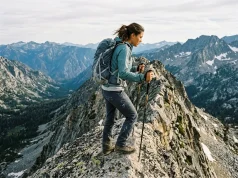
The wind on the divide screams at 40mph, stripping the heat from your layers and drowning out your partner’s voice. You aren’t hanging by your fingertips from a vertical cliff, but you are certainly no longer just “hiking.”
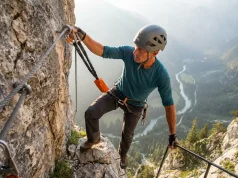
This is the gray zone of non-technical mountaineering—a domain defined not by vertical gymnastics, but by system management, exposure, and the relentless thinning of the air. The hiker-to-climber transition requires a fundamental shift in mindset. You stop managing just your energy and start managing your survival systems.
In this guide, we will navigate the “No-Fall Zone” of YDS Class 3 and Class 4 terrain, explain why your comfortable hiking boots are dangerous on steep snow, and outline the acclimatisation hikes necessary to keep your lungs functioning when the oxygen drops by 50%.
What Defines “Non-Technical” Mountaineering? (The Terrain Matrix)
The term “non-technical mountain” is often misinterpreted as “easy.” In the alpine zones, this label simply refers to the absence of pitched rock climbing where ropes are required to haul you upward. It does not imply a lack of danger. In fact, most accidents happen here because the hazards are often underestimated.
Where does hiking end and climbing begin? (YDS Class 1-4)
To understand your objective, you must speak the language of the mountains. The Yosemite Decimal System (YDS) classifies terrain from Class 1 (walking) to Class 5 (technical climbing). Non-technical mountaineering typically spans from YDS Class 1-3 through YDS Class 4.
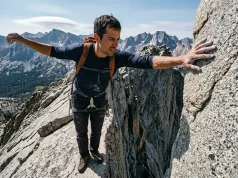
Class 2 involves off-trail scrambling over talus or scree, typical of routes like Mount Temple in the Canadian Rockies or Grays Peak and Torreys Peak in Colorado. The critical threshold is Class 3. Here, you must use your hands for upward movement. While a rope is rarely used, a fall could result in broken bones or worse. You are no longer relying solely on endurance; you are relying on balance and route-finding.
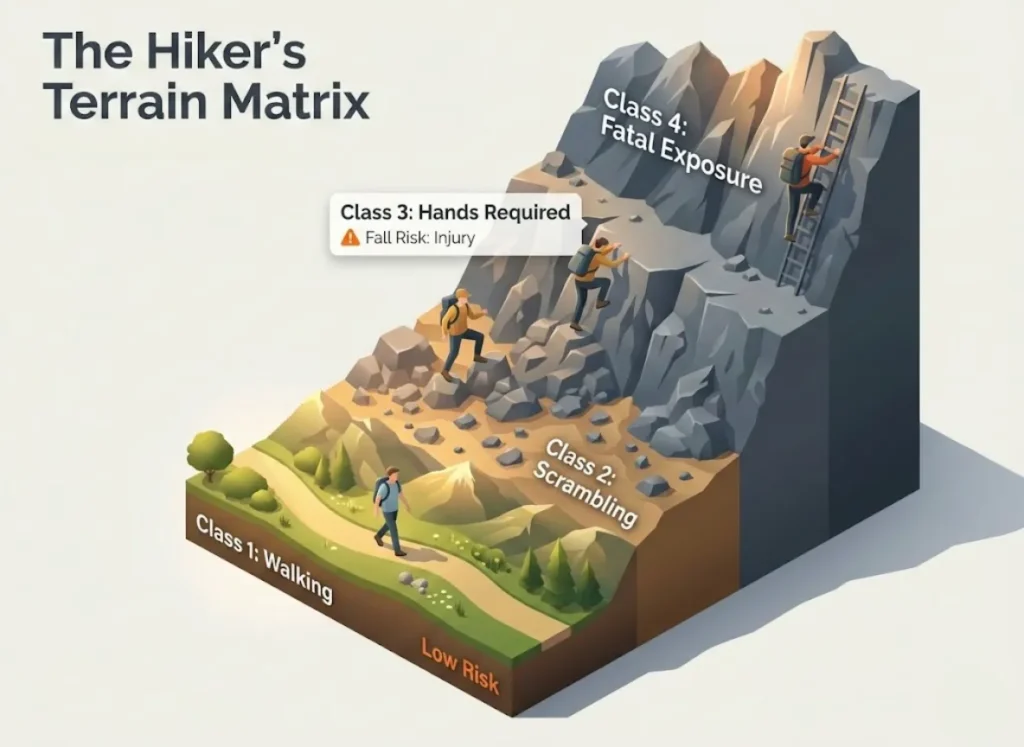
Class 4 is the upper limit of this category. The holds are generally large and solid, but the exposure is significant enough that a fall is often fatal. This creates a psychological paradox. The moves are physically easy—like climbing a steep ladder—but the consequence of error is absolute. Classic examples include the “Keyhole” on Longs Peak or the final moves on the Mountaineer’s Route of Mt. Whitney.
Many climbers carry a rope in Class 4 terrain not for physical aid, but for psychological “security” or to rappel down. The National Park Service defines the risk profiles of these classes clearly to warn visitors that simple movement does not equal safe terrain.
Navigating this terrain requires more than fitness. It requires understanding the Yosemite Decimal System deeply enough to read a route description and know exactly when a “hike” turns into a “climb.”
What Gear is Required to Transition from Hiker to Mountaineer?
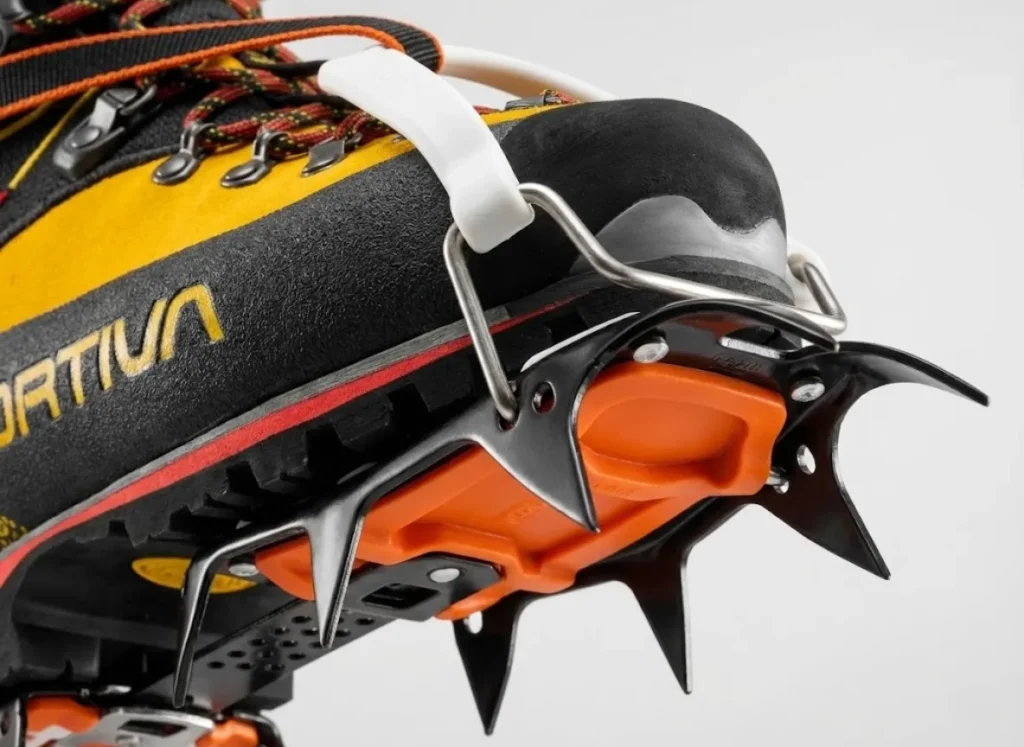
Once you leave the trail, the ground beneath you changes. Soft dirt gives way to hard neve snow and ice. Your footwear must evolve to match this new surface to ensure safety and efficiency.
Why are standard hiking boots insufficient for mountaineering? (The B-Scale)
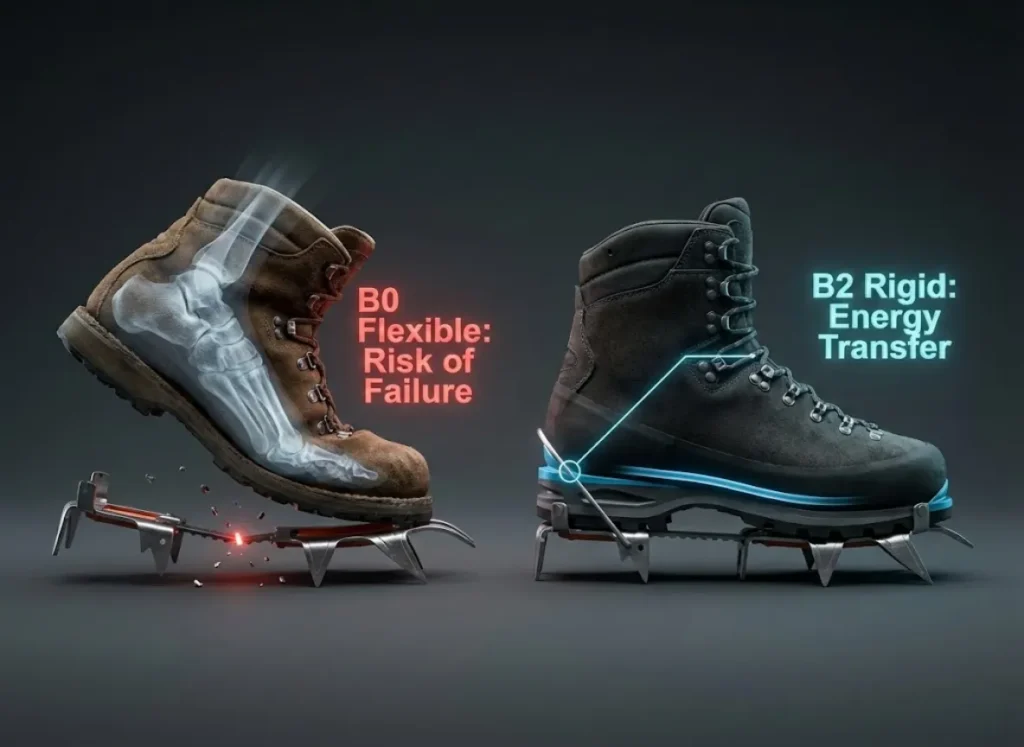
Hiking boots (rated B0) are designed with flexible soles. This flexibility aids the natural “toe-off” phase of your gait, making miles on a dirt trail comfortable. However, on steep snow, this flexibility is a liability. Mountaineering requires a rigid or semi-rigid sole (B2 or B3) to provide a stable platform for kicking steps and to prevent the foot from flexing inside a crampon.
Pro-Tip: Never attempt to strap a rigid crampon (C2) onto a flexible hiking boot (B0). The boot will flex while the metal bar of the crampon stays rigid. This tension creates metal fatigue, causing the crampon bar to snap—usually when you are halfway up a steep slope.
A “B2” boot is the industry standard for non-technical mountaineering. It offers a stiff shank for climbing performance but retains just enough rocker (curve) to be walkable on the approach. This stiffness is critical because it supports the stiffness of the boot shank, allowing you to transfer energy directly into the ice rather than wasting it on sole flexion.
Additionally, mountaineering boots feature “welts”—plastic ledges on the heel—that allow for the secure, snap-on attachment of a semi-automatic crampon. This eliminates the “slop” found in universal strap-on crampon systems, providing the precision needed for difficult footing.
Always ensure your gear meets The UIAA safety standards for crampon connectivity, as a loose crampon on an icy traverse is a recipe for disaster.
How Does Altitude Impact Safety and Success? (The Invisible Crux)
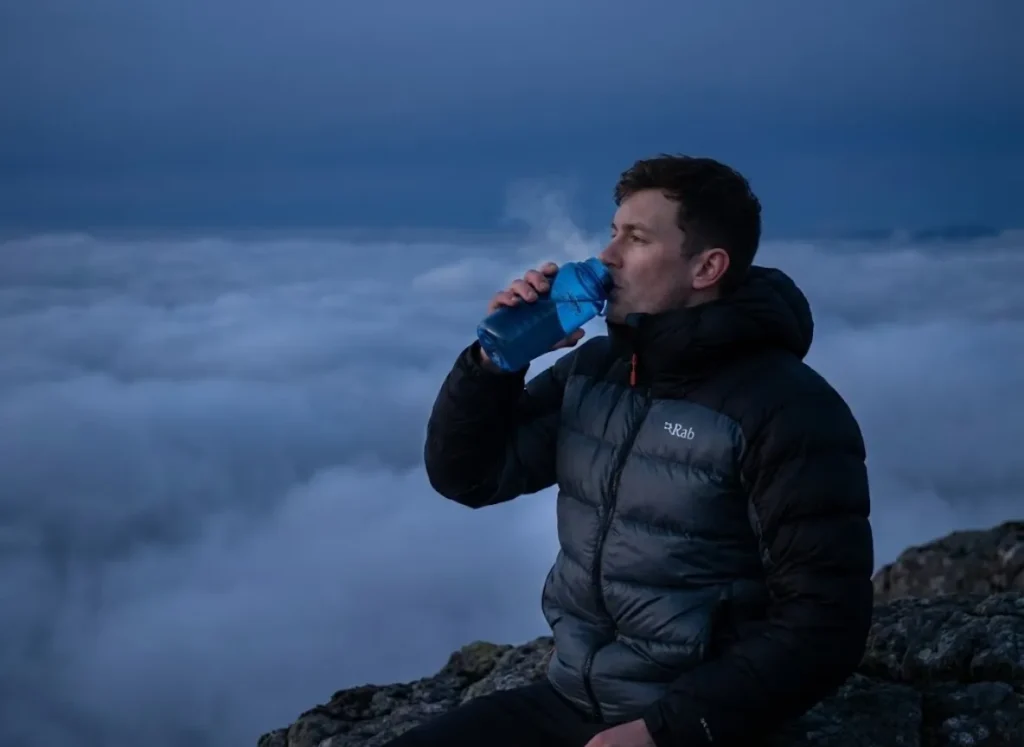
While boots protect your feet, your physiology determines whether you reach the top. On peaks like Aconcagua or even Mount Rainier, physical strength is secondary to physiological efficiency. The primary cause of failure isn’t muscle fatigue; it is high-altitude sickness and the inability to process oxygen.
What is the difference between AMS and life-threatening conditions?
Acute Mountain Sickness (AMS) is the body’s reaction to hypoxia. It is characterized by a “hangover” feeling—headache plus nausea or dizziness. The “Lake Louise Score” is the clinical standard used to diagnose severity. Mild AMS is uncomfortable but manageable; however, pushing through it can be deadly.
You must distinguish AMS from its lethal cousins: High Altitude Cerebral Edema (HACE) and High Altitude Pulmonary Edema (HAPE). HACE involves brain swelling and loss of coordination (ataxia). HAPE is fluid in the lungs, signaled by a wet cough and breathlessness at rest.
If these symptoms appear, descent is the only cure. The CDC Yellow Book guidelines for high-altitude travel emphasize that these conditions can strike even the fittest athletes if they ascend too quickly.
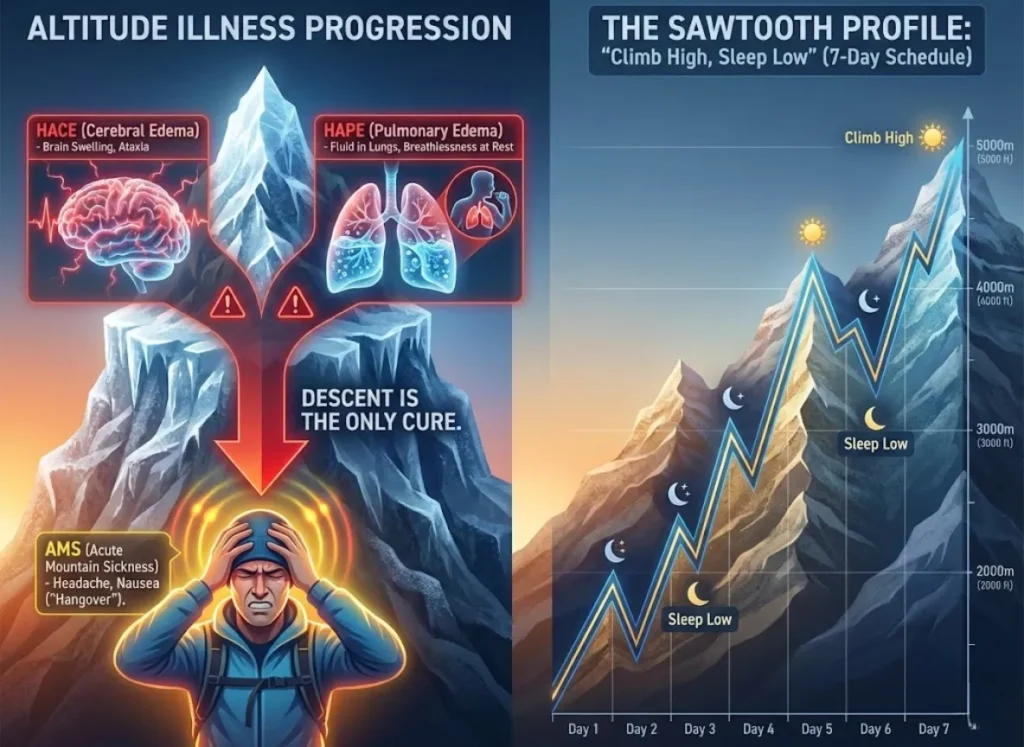
To prevent this, mountaineers follow the “Climb High, Sleep Low” protocol. You push your body to higher elevations to stimulate red blood cell production, then descend to sleep and recover. Understanding the science of altitude sickness is just as important as knowing how to tie a knot.
Which North American Peaks Are the Best Training Grounds?
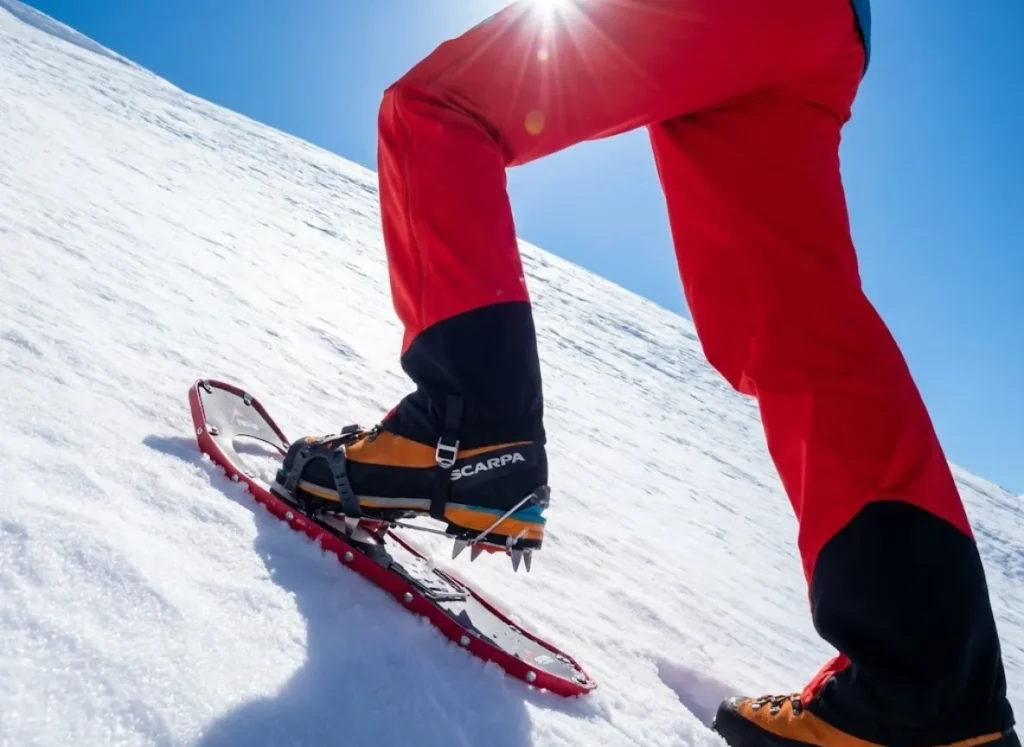
With the physiology understood, you need a place to practice. Before heading to the Himalayan giants, you need to cut your teeth on domestic peaks that mimic the conditions of the greater ranges.
Which summits offer the best introduction to steep snow? (Shasta & St. Helens)
Mount St. Helens (via the Winter Route) serves as the perfect entry-level classroom. It is a strenuous hiking challenge that transforms into a snow trek. It requires crampons and ice axe skills but generally lacks crevasse danger. It allows you to focus on your footwork without the stress of hidden holes in the ground. Similar training can be found on Mount Adams via the South Spur or South Sister in Oregon.
Mount Shasta via Avalanche Gulch is the logical next step. It presents a massive 7,000-foot ascent on steep snow (up to 35 degrees). Here, you learn the essential skill of “self-arrest”—using your axe to stop a slide. Mastering ice axe skills here is mandatory, as a slip on the firm morning snow can lead to a dangerous, uncontrolled slide.
Timing is critical. Shasta is best climbed in May or June. Consult The U.S. Forest Service climbing guidelines for Mt. Shasta for current conditions, as late-season climbing turns the route into a bowling alley of loose rock. For those on the East Coast, winter ascents of Mount Washington or Mt. Katahdin offer brutal lessons in weather management and scrambling on ice.
Where can you practice glaciated travel without vertical rock? (Rainier & Olympus)
Mount Rainier is the premier training ground for US mountaineering. Routes like the Disappointment Cleaver require ropes, harnesses, and crevasse rescue teams. The challenge here is the complex glacier navigation, mimicking the Khumbu Icefall on a smaller scale.
Mount Olympus offers a different flavor: a remote, expeditionary feel. It requires a long approach through the rainforest before you even touch the Blue Glacier. These peaks bridge the gap between “snow hiking” and technical climbing.
Pro-Tip: On glaciated terrain, your traction choice is non-negotiable. Learn the nuances of choosing between microspikes and crampons; spikes are useless on the hard glacial ice of Rainier or Mount Baker.
Success on Rainier is often dictated by weather. NPS route briefs for the Disappointment Cleaver provide vital data on route changes, as the glacier moves and cracks throughout the season.
What Are the Top International Objectives for Non-Technical Alpinists?
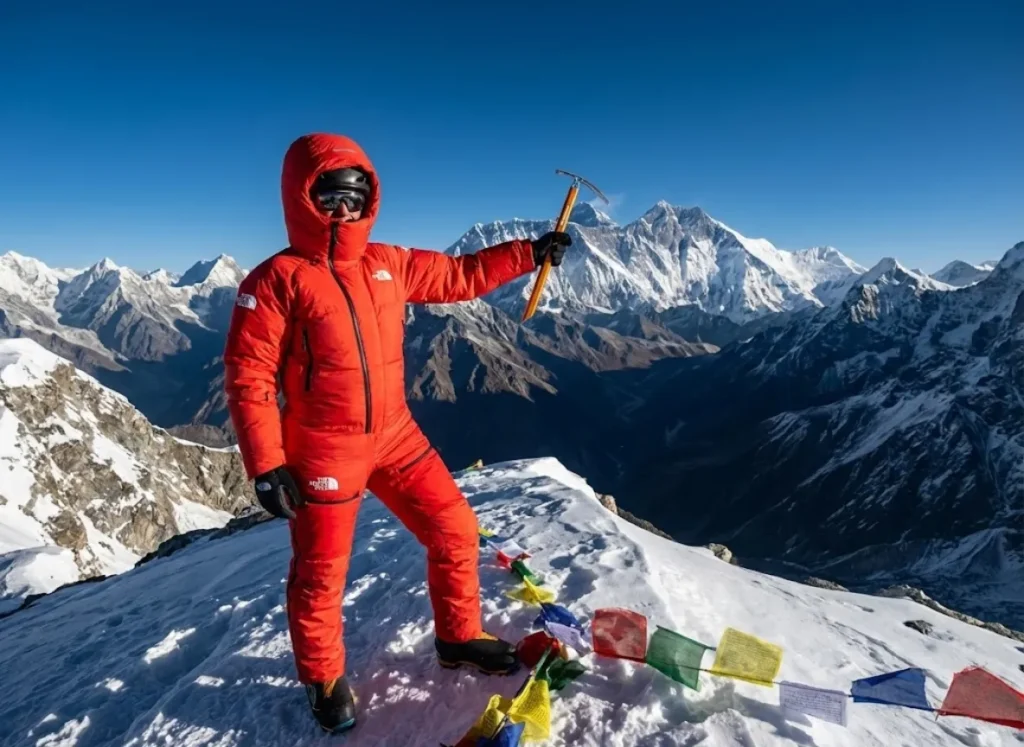
Once you have mastered the volcanoes of the Pacific Northwest, the high peaks of the world await. From the Andes Mountains to the Atlas Mountains, the options for high-altitude climbs are vast. However, marketing terminology can be deceptive.
Are “Trekking Peaks” actually just treks? (Island Peak vs. Mera Peak)
In Nepal, the designation “Trekking Peaks” by the NMA refers to the permit fee structure, not the difficulty. This leads many hikers to underestimate the challenge. The Nepal Mountaineering Association’s classification of peaks lists mountains that range from simple walks to technical climbs under the same label.
Mera Peak (6,476m) and Yala Peak fit the “non-technical” description well. These are high-altitude snow plods that test endurance but require minimal technical manipulation. Island Peak (Imja Tse), conversely, is often marketed as a trek but requires ascending a 100-meter headwall of 50-degree ice using a jumar and crossing deep crevasses on ladders.
Beyond the Himalayas, the global circuit offers incredible non-technical mountain climbs. Mt. Kilimanjaro in Tanzania and Mt. Elbrus in Russia are classic Seven Summits objectives that require no technical rock skills. In the Andes, Aconcagua stands as the “easiest 20000 ft peak” (technically nearly 23,000 ft) via the Normal Route, though the altitude is crushing. Even Mt. Toubkal in Morocco or Mt. Fuji in Japan offer high-altitude experiences for those building their resume.
Proper preparation involves understanding the transition from hiking to trekking and then to mountaineering. An unprepared climber on Island Peak is a liability to the entire rope team.
Conclusion
Non-technical mountaineering redefines difficulty. It implies you don’t need rock shoes, but you absolutely need technical systems for snow, ice, and altitude. The interface between a B2 boot and a crampon is the single most critical gear decision you will make.
Progression is safety. Moving from YDS Class 3 scrambling to snow hiking, and finally to glaciated travel, builds the “wilderness instinct” that prevents accidents.
Ready to start your progression? Begin by reviewing our comprehensive guide to Advanced Trekking Techniques to ensure your foundation is solid before you book your first summit bid.
FAQ – Frequently Asked Questions
What is the difference between hiking and mountaineering?
Mountaineering begins where the consequences of a fall become severe (Class 3 or 4) or where technical tools like crampons, axes, and ropes are required to manage objective hazards like ice and crevasses. Hiking generally implies a trail or route where balance and friction are sufficient for travel.
Can I climb Mount Kilimanjaro without any technical experience?
Yes, Mt. Kilimanjaro is a walk-up summit that requires no ropes or axes. However, success depends entirely on physical fitness and, more importantly, your body’s ability to acclimatize to extreme altitude (19,341 ft).
Do I need a guide for non-technical peaks like Mt. Rainier?
While not legally required for private parties, it is highly recommended for novices due to the complex glaciated terrain. Unchecked crevasse falls are fatal, and navigating them requires a rope team skilled in Z-pulley rescue systems.
How long does it take to train for a major non-technical summit?
A typical training cycle lasts 12 to 16 weeks. This periodized approach starts with base aerobic volume (hiking), moves to strength (weighted pack carries), and finishes with muscular endurance intervals just before the climb.
Risk Disclaimer: Hiking, trekking, backpacking, and all related outdoor activities involve inherent
risks which may result in serious injury, illness, or death. The information provided on The Hiking Tribe is for
educational and informational purposes only. While we strive for accuracy, information on trails, gear, techniques,
and safety is not a substitute for your own best judgment and thorough preparation. Trail conditions, weather, and
other environmental factors change rapidly and may differ from what is described on this site. Always check with
official sources like park services for the most current alerts and conditions. Never undertake a hike beyond your
abilities and always be prepared for the unexpected. By using this website, you agree that you are solely
responsible for your own safety. Any reliance you place on our content is strictly at your own risk, and you assume
all liability for your actions and decisions in the outdoors. The Hiking Tribe and its authors will not be held
liable for any injury, damage, or loss sustained in connection with the use of the information herein.
Affiliate Disclosure: We are a participant in the Amazon Services LLC Associates Program, an
affiliate advertising program designed to provide a means for us to earn advertising fees by advertising and linking
to Amazon.com. As an Amazon Associate, we earn from qualifying purchases. We are also an official affiliate partner
of Black Diamond Equipment via the AvantLink network. If you click on a Black Diamond affiliate link and make a
purchase, we may earn a commission at no additional cost to you. We also participate in other affiliate programs and
may receive a commission on products purchased through our links. Additional terms are found in the terms of
service.