In this article
The tick was already burrowing when I spotted it—a pepper-fleck-sized nymph just above my sock line, exactly where my gaiter had gapped from the boot tongue. I was three miles into a Pennsylvania section of the Appalachian Trail, deep in what thru-hikers call “tick country,” and despite treating my clothes with permethrin the week before, I’d missed the one vulnerability point that mattered most.
That moment changed how I think about tick prevention. It’s not about any single product or trick. It’s about building a layered integrated defense system that accounts for how these tiny disease-carrying ticks actually behave. After countless miles through Lyme-endemic regions and more tick encounters than I care to count, I’ve developed a 3-stage approach that addresses every phase of your hike—before, during, and after.
Here’s the system that’s kept me tick-bite-free for the past three seasons.
⚡ Quick Answer: Effective tick prevention requires a 3-stage approach: pre-hike preparation with permethrin treatment of clothing and gaiters, on-trail vigilance with mechanical barriers plus periodic self-checks every 2 hours, and the post-hike dryer protocol (10 minutes on high heat kills ticks through desiccation). Hiking gaiters reduce tick encounters by over 3x when treated and properly sealed—but gaps at the boot tongue gap and worn velcro are the failure points that let ticks through.
The Biology You’re Up Against: Understanding the Tick Threat

If you want to beat ticks, you need to understand how they find you. These aren’t aggressive hunters. They’re patient ambush predators that use a behavior called questing—climbing vegetation and extending their front legs equipped with sensory organs called Haller’s organs to detect CO₂, body heat, and movement from passing hikers.
The Questing Behavior: How Ticks Find You
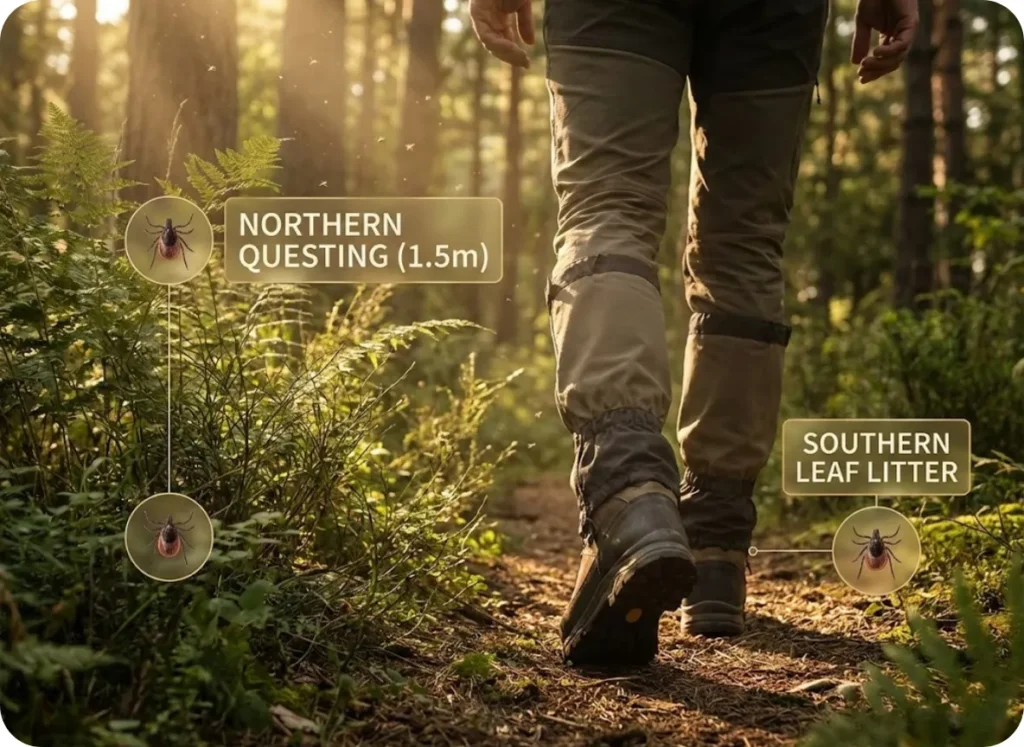
Here’s what most trail guides won’t tell you: questing height varies dramatically by geography. In the Northeast and Upper Midwest, blacklegged tick nymphs will climb brush and vegetation up to 1.5 meters high—exactly where your legs brush against trailside plants. In the Southeast, the same species tends to stay low in leaf litter to avoid desiccation in the heat.
This isn’t trivia. It determines whether you need ankle gaiters or knee-high gaiters. If you’re hiking in Pennsylvania, New York, or Connecticut during peak nymph tick season (June through August), mid-calf protection is the minimum. Down in Georgia? Focus on treating your shoes and socks instead.
The Transmission Clock: Why Minutes Matter
The good news about Lyme disease: the spirochete that causes it typically takes 24-48 hours to migrate from the tick’s gut to its salivary glands and into your bloodstream. That’s your grace period—find and remove the tick early, and transmission is unlikely.
The bad news? Not all tick-borne diseases play by those rules. Powassan virus can transmit within 15 minutes of attachment. No grace period. No time for a leisurely post-hike body check. This changes the entire strategy from “find and remove” to “prevent contact entirely.”
Pro tip: Don’t rely on the 24-hour rule as your safety net. The research is clear about Lyme, but faster-transmitting tick-borne pathogens mean prevention beats post-hike removal every time.
Why Gaiters Became Essential (Not Optional)
Standard hiking advice once treated hiking gaiters as optional debris shields—something you’d use in snow or scree, not on summer trails. The emergence of faster-transmitting viral pathogens has changed that calculus.
A study of hikers wearing permethrin-treated outfits found they experienced 3.36x fewer tick bites than control groups. But here’s the key: the treatment alone wasn’t enough. The physical barrier of the right gaiter for your terrain creates a mechanical protection layer at exactly the height where questing ticks wait to hitch a ride on your legs.
Stage 1: Pre-Hike Chemical Defense (Permethrin Protocol)
Permethrin is the chemical treatment backbone of any serious tick prevention system. But it’s not a repellent like DEET—it’s an acaricide that kills ticks on contact through a mechanism that disrupts their nervous system.
The Science Behind Permethrin: Acaricide vs. Repellent
When a tick crawls across permethrin-treated fabric, the chemical attacks its nervous system, causing paralysis and death. Studies show over 80% mortality in ticks exposed to treated textiles, and something professionals call the “hot foot” effect—ticks often detach and fall off before they even find a feeding site.
Is it safe? Permethrin is over 2,500 times more toxic to ticks than to humans. Your body breaks it down rapidly, making it safe for personal protective equipment use on clothing. The EPA has registered it as safe for use on children’s clothing and for pregnant women.
One critical warning for cat owners: Wet permethrin is highly toxic to felines due to their inability to metabolize it. Keep cats away from treated gear until it’s completely dry—at least 2-3 hours in good ventilation.
Factory Treatment vs. DIY: Choosing Your Method
Not all permethrin treatments are equal.
Factory-treated apparel (like Insect Shield) uses polymer binding to fuse the chemical into the fabric itself. This approach lasts 70+ wash cycles—essentially the lifespan of the garment. It’s the gold standard for items you wear constantly: Darn Tough socks, base layers, hiking shirts.
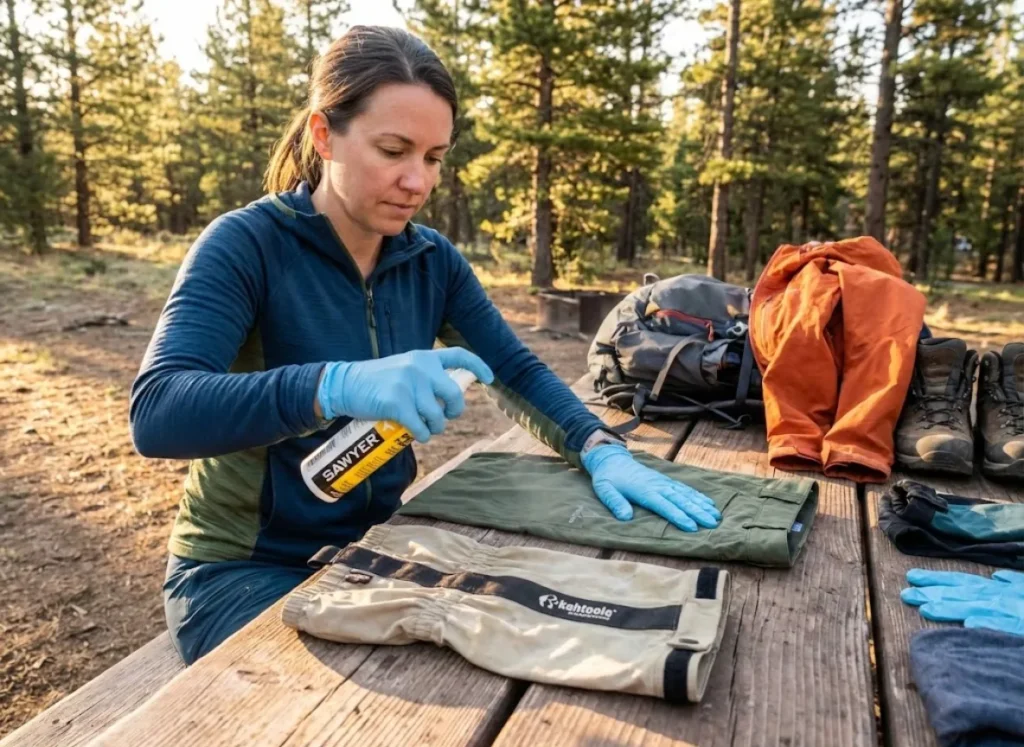
DIY permethrin spray like Sawyer Products is a surface-level treatment that degrades after 5-6 washes or about 6 weeks of UV exposure. It’s best for gear you wash infrequently—gaiters, backpacks, camp chairs.
The thru-hiker hack: Serious long-distance hikers use Martin’s 10% Permethrin (a livestock product) diluted to 0.5% for a full soak treatment. It saturates fibers completely, costs a fraction of Sawyer spray, and treats an entire wardrobe in one session. The smell is brutal—diesel fuel-adjacent—but it works.
Pro tip: Treat your socks and underwear with Insect Shield for durability where it matters most. Spray your gaiters and pack with Sawyer. Use the soak method for shirts and pants if you’re doing multi-week overnight backcountry backpacking trips.
The DWR Conundrum: Treating Waterproof Gear
Here’s a problem nobody talks about: DWR coatings (the waterproofing on your rain gear and many gaiters) actively prevent permethrin absorption. The chemical needs to soak into fabric fibers, and hydrophobic surfaces repel it.
The workaround? Treat underlayers instead of the waterproof shell. Or look for building a layering system that works against ticks where your treated mid-layer provides the chemical barrier and your outer shell provides weather protection.
Some premium brands like Sitka Gear are solving this with integrated systems—the Equinox Guard pants combine built-in gaiters with factory Insect Shield treatment, eliminating the DWR problem entirely.
Stage 2: On-Trail Defense (Mechanical Barriers + Vigilance)
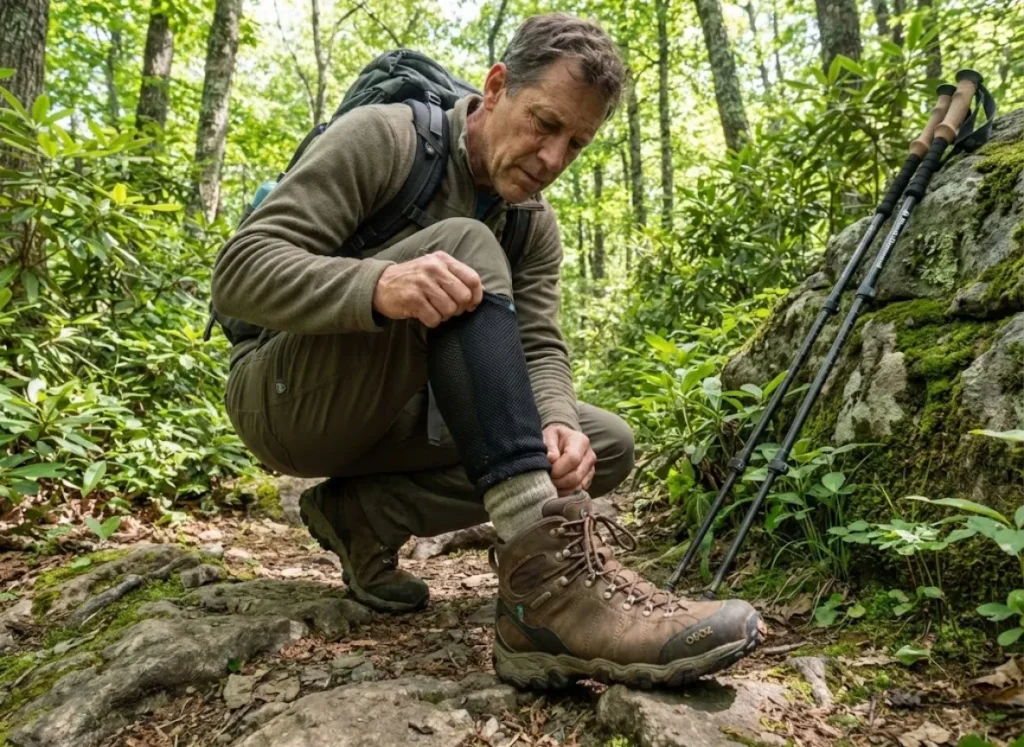
Chemical treatment sets the foundation, but mechanical exclusion is your active defense during the hike. This is where leg gaiters earn their place in your kit.
Choosing the Right Gaiter Height for Your Region
Your gaiter selection should match local tick behavior science.
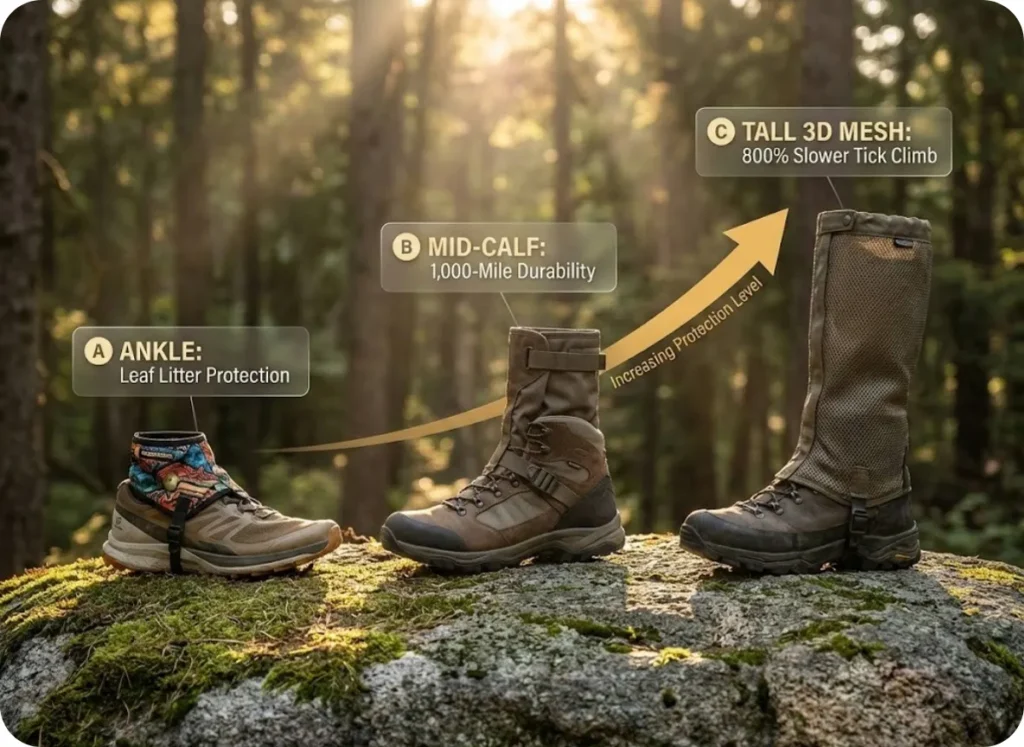
Trail leg gaiters (ankle height) work for Southern trails where ticks stay in leaf litter. Ultralight options like Dirty Girl Gaiters weigh nothing and pair well with DIY permethrin spray treatment—but you’ll need to attach a velcro patch to your shoe.
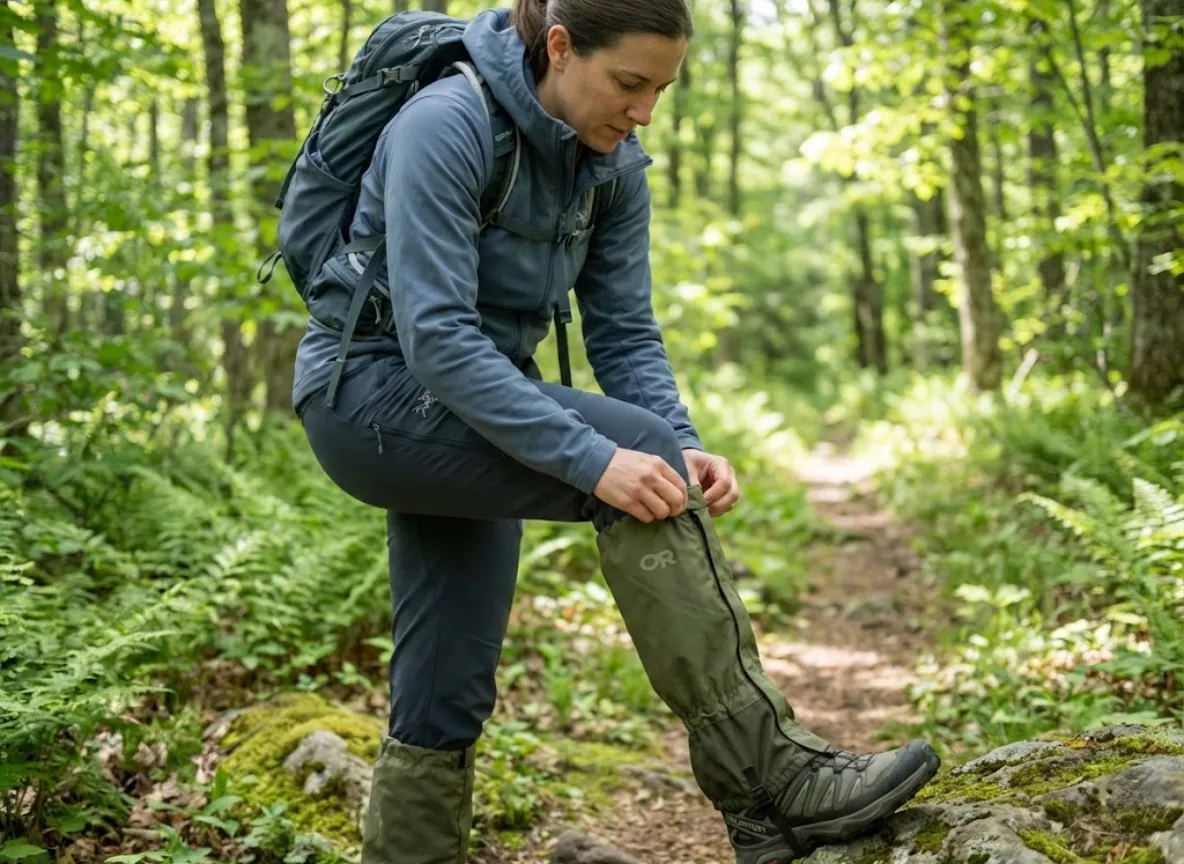
Mid-calf gaiters are the minimum for high-tick-density areas in the Northeast. The Kahtoola RENAgaiter offers a 1,000-mile warranty on its thermoplastic strap, while the Outdoor Research Crocodile provides bomber durability in rocky terrain.
For maximum protection in dense brush, Lymeez makes gaiters specifically designed for tick exclusion. Their 3D mesh technology slows tick climbing speed by up to 800% compared to flat-weave fabrics—the longer a tick struggles in the mesh, the more permethrin it absorbs.
Sealing the Vulnerability Points
Your gaiter is only as good as its seal. Most hikers get the big stuff right—gaiter on, laces covered—but miss the critical failure points.
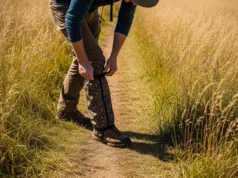
The boot tongue gap is the #1 overlooked vulnerability. The gap where boot tongue meets laces creates a direct entry point. Ticks crawl under the gaiter and into your sock through this highway. Solution: use the clothing tucking method—tuck pants INTO socks (yes, it looks dorky), then secure gaiters OVER the tucked hem with full velcro contact at the shoe heel using the gaiter-boot interface seal.
The instep strap is the most common mechanical failure in hiking gaiters—rock abrasion wears through it faster than anything else. Carry spare velcro and Shoe Goo in your repair kit. Experienced day hikers and thru-hikers alike reinforce factory velcro with adhesive before the first use because self-adhesive strips always fail in mud.
The 2-Hour Trail Check Protocol
Given that Powassan can transmit in 15 minutes, waiting until post-hike for your first tick check is risky in endemic areas. The 3-minute gaiter check every 2 hours of hiking covers your hot zones: ankles, sock line, waistband, and anywhere your pack straps contact skin.
Look for the smallest ticks—nymph ticks are poppy-seed sized and cause most Lyme infections because they’re so hard to spot. Run your fingertips along sock lines and gaiter edges, feeling for tiny bumps. The tactile checking process catches what eyes miss on dark fabric.
Stage 3: Post-Hike Elimination Protocol
You made it back to the car. The fun hike is over. But your tick defense isn’t complete until you’ve run the post-hike elimination decontamination procedure.
The Dryer-First Protocol (CDC Endorsed)
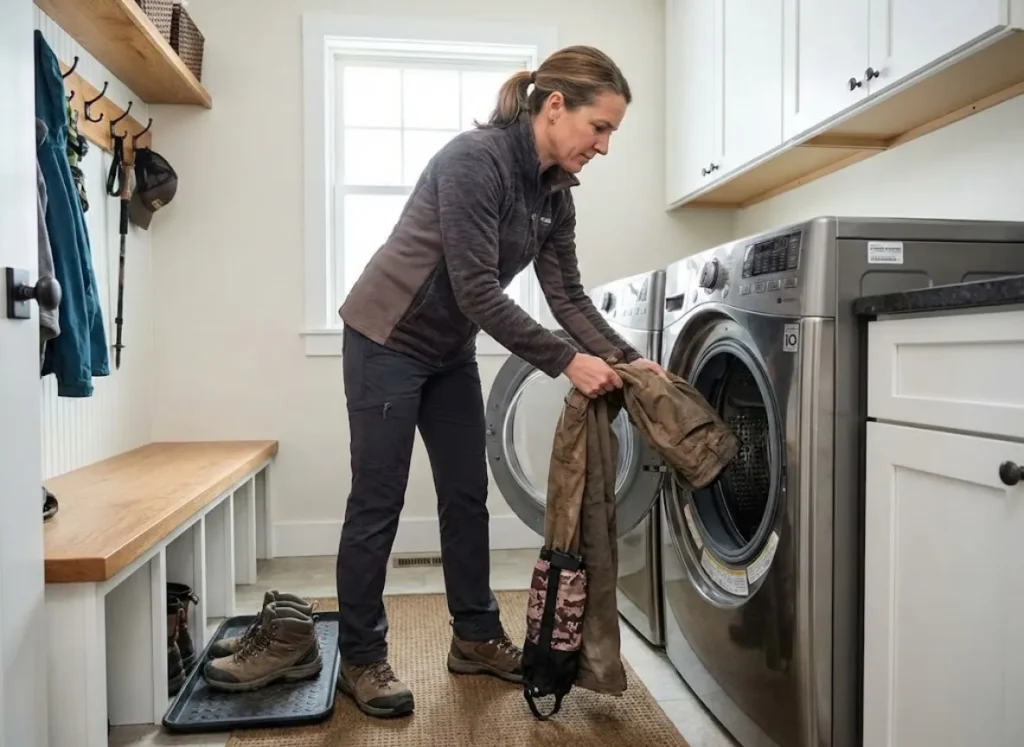
Here’s something that surprises most hikers: the dryer is more effective at killing ticks than the washing machine. High heat for 10 minutes causes fatal desiccation—ticks literally dry out and die.
The CDC recommends putting hiking clothes directly into the dryer BEFORE washing. Water doesn’t reliably kill ticks; they can survive submersion. Heat does. If your clothes are wet from sweat or stream crossings, dry them until the fibers are completely dry, then add 10 more minutes on high.
Pro tip: Strip at the door. Hiking clothes go directly into the dryer in a dedicated “tick laundry” bag before you do anything else. The ticks are dead before you’ve even showered.
This protocol should happen within 2 hours of returning home—inside the CDC’s official tick prevention guidelines window for maximum effectiveness.
The Full-Body Inspection Checklist
After the dryer, do your full post-hike body check. Work through these tick attachment zones in order: behind the knees, groin and waistband, armpits, behind ears, scalp (especially the hairline), and belly button.
Use a handheld mirror for hard-to-see areas, or have a partner help with your back and scalp. Shower within 2 hours of hiking—running water may dislodge unnoticed ticks, and soapy hands can feel bumps that eyes miss through visual detection.
Proper Tick Removal: The Tweezer Protocol
Found one attached? Don’t panic. Grab fine-tipped tweezers or a tick key—not the blunt household kind. Grasp the tick as close to your skin as possible, right at the mouthparts, and pull upward with steady, even pressure. No twisting, no jerking. This is the core of easy-to-follow tick removal and proper tick etiquette.
If mouthparts break off and stay in the skin, leave them alone. Your body will expel them. Don’t dig.
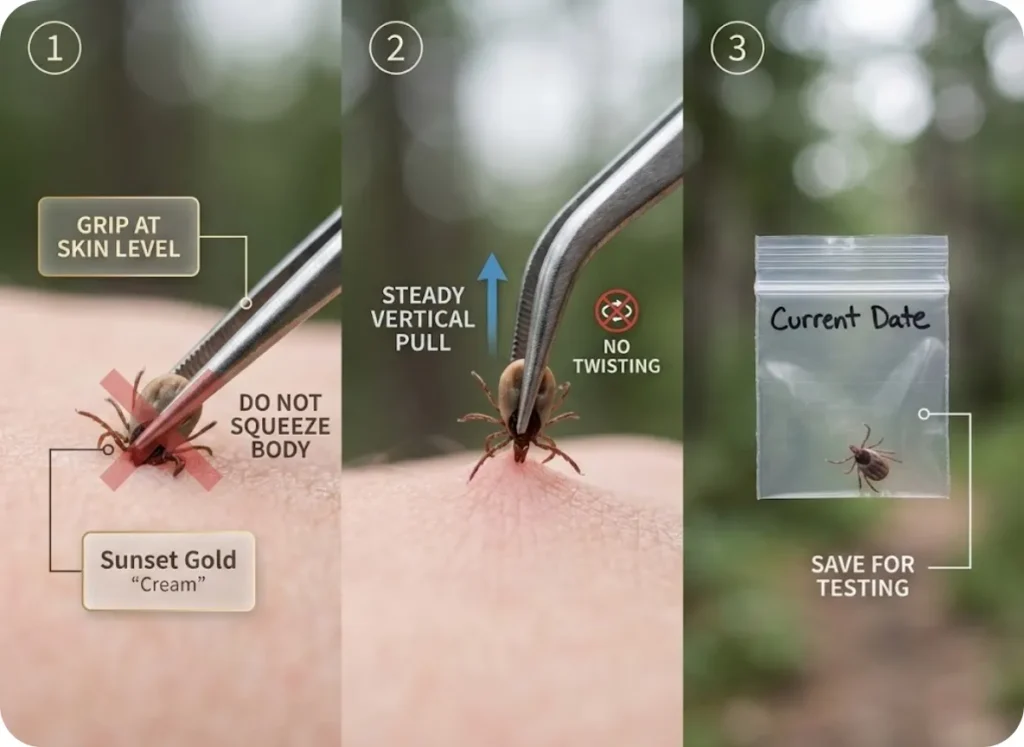
What NOT to do: Burning with a match, coating with nail polish, or smothering with petroleum jelly are folk remedies that don’t work. Worse, they can cause the tick to regurgitate into the wound before you remove it. Save the tick in a sealed bag with the date at the bite site if you want the option of testing later.
For guidance on what comes next after possible tick exposure, see what to do after the bite for signs that warrant medical attention.
Gear Deep Dive: Building Your Tick-Defense Kit
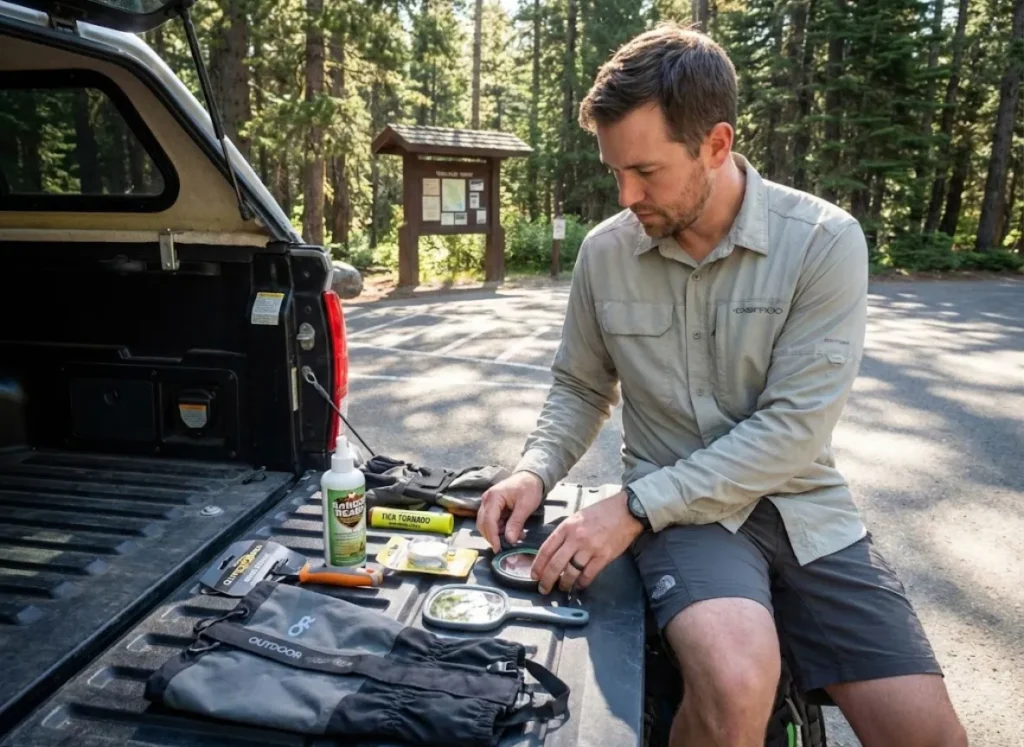
The right gear makes this systems thinking protocol automatic rather than something you have to think through every time.
Gaiter Selection by Use Case
For thru-hikers prioritizing weight, Dirty Girl Gaiters (1 oz) plus DIY permethrin treatment deliver adequate protection. You’ll need to add a velcro patch to your trail runners.
For day hikers in serious tick country, invest in purpose-built options. The Lymeez 3D Mesh Tick Gaiters are specifically engineered for tick exclusion through that mechanical slowing effect. Kahtoola’s RENAgaiter offers that 1,000-mile strap warranty if you’re hard on gear in rocky terrain.
For hunters and bushwhackers moving through dense brush, consider the integrated approach: Sitka’s Equinox Guard pants combine internal gaiters with factory Insect Shield treatment, eliminating the gaiter-boot interface problem entirely.
Permethrin Products Worth Your Money
Sawyer Products Permethrin Spray (0.5%) remains the consumer standard—the “yellow bottle” you’ll find at REI and every outdoor retailer. Best for gear you don’t wash often.
Insect Shield’s send-in service costs $8-9 per item but delivers factory-quality treatment that lasts 70+ washes. Worth it for socks, underwear, and shirts you’ll cycle through constantly—the best cost-per-wash analysis in the category.
Ranger Ready Permethrin offers a no-odor formula if the standard smell bothers you or your hiking partners.
For the budget-conscious with re-treatment longevity concerns: Martin’s 10% Permethrin (a livestock product) diluted to 0.5% will treat an entire wardrobe for years at minimal cost. Mix 1 part Martin’s with 19 parts water for proper concentration.
When the Defense Fails: Medical Response Protocol
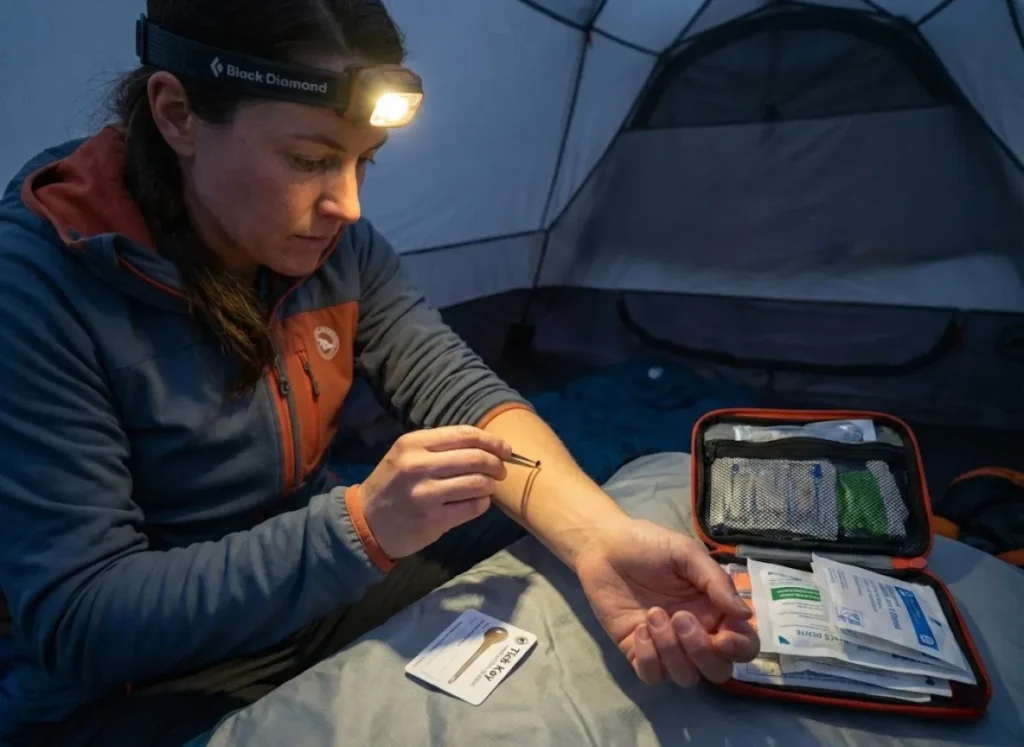
Even the best system has failure stories. Knowing when to seek help matters as much as prevention.
If you develop erythema migrans (the expanding “bull’s-eye” rash) within 3-30 days of a bite, that’s a classic Lyme indicator—though it’s not always a perfect bull’s-eye. Fever, chills, fatigue, or muscle aches within 1-4 weeks of a bite warrant a doctor’s visit, especially if you’ve been in tick hot spots.
The NOLS wilderness medicine protocol for family hiking safety is straightforward: if fever or expanding rash develops in the backcountry, prioritize evacuation. In endemic areas, some doctors prescribe a single 200mg dose of doxycycline within 72 hours of a confirmed deer tick bite attached for 36+ hours—a vector-borne disease prophylaxis approach. This is a conversation to have with your doctor BEFORE your hiking trip. Their guidance aligns with NOLS wilderness medicine guidelines for tick bites.
Conclusion
The 3-stage system works because it addresses how ticks actually behave, not how we imagine they do. Pre-hike preparation with permethrin stops most encounters before they start—factory-treated apparel on high-contact layers, DIY permethrin spray on gear. On-trail vigilance with mechanical protection closes the gaps that chemicals miss, but only if you seal the boot tongue gap and perform gaiter inspection every couple hours. The post-hike decontamination procedure with the dryer-first protocol catches any survivors before they have transmission opportunity.
The whole system takes maybe 20 minutes of prep time and a few seconds of attention on the trail. That’s a worthwhile trade against months of tick-borne illness treatment or worse.
Next time you hit the trail in tick country, run through the checklist: permethrin on, gaiters sealed, 2-hour checks, dryer first. Happy trails—and tick smart ones.
FAQ
Do hiking gaiters actually prevent tick bites, or is it just marketing?
They work—but only as part of a system. Research shows permethrin-treated gaiters reduce tick encounters by 3.36x compared to untreated hikers. The key is treating the fabric AND sealing all gaps at the gaiter-boot interface. Gaiters alone without treatment and proper sealing are far less effective.
How long does permethrin last on gaiters after application?
It depends on the method. DIY permethrin spray lasts 5-6 washes or about 6 weeks of UV exposure, affecting re-treatment longevity. Factory-treated apparel can withstand 70+ wash counts due to polymer binding technology. Match your treatment method to how often you wash the item.
Can ticks bite through leggings or spandex?
Technically yes, but it’s rare. Ticks prefer bare skin and usually migrate to find openings at the waistband or sock line. Treat thin hiking clothes for tick prevention with permethrin and always tuck pants into socks to force any ticks onto exterior surfaces where they contact the chemical.
Does washing clothes kill ticks, or do I need to use the dryer?
Washing alone does NOT reliably kill ticks—they can survive water submersion. The dryer is your lethal weapon: 10 minutes on high heat causes fatal dehydration. If clothes are wet, dry them until completely dry, then add 10 more minutes. Dryer first, wash second—that’s the core of tick checking 101.
How do I check for ticks if I’m hiking solo without a partner?
Combine the tactile checking process with visual detection. Run fingertips along all hot zones (ankles, waistband, armpits, hairline) feeling for grain-of-sand-sized bumps. Use a handheld mirror or take a phone selfie for your back. Shower within 2 hours—soapy hands catch unnoticed ticks that eyes miss.
Risk Disclaimer: Hiking, trekking, backpacking, and all related outdoor activities involve inherent
risks which may result in serious injury, illness, or death. The information provided on The Hiking Tribe is for
educational and informational purposes only. While we strive for accuracy, information on trails, gear, techniques,
and safety is not a substitute for your own best judgment and thorough preparation. Trail conditions, weather, and
other environmental factors change rapidly and may differ from what is described on this site. Always check with
official sources like park services for the most current alerts and conditions. Never undertake a hike beyond your
abilities and always be prepared for the unexpected. By using this website, you agree that you are solely
responsible for your own safety. Any reliance you place on our content is strictly at your own risk, and you assume
all liability for your actions and decisions in the outdoors. The Hiking Tribe and its authors will not be held
liable for any injury, damage, or loss sustained in connection with the use of the information herein.
Affiliate Disclosure: We are a participant in the Amazon Services LLC Associates Program, an
affiliate advertising program designed to provide a means for us to earn advertising fees by advertising and linking
to Amazon.com. As an Amazon Associate, we earn from qualifying purchases. We are also an official affiliate partner
of Black Diamond Equipment via the AvantLink network. If you click on a Black Diamond affiliate link and make a
purchase, we may earn a commission at no additional cost to you. We also participate in other affiliate programs and
may receive a commission on products purchased through our links. Additional terms are found in the terms of
service.