In this article
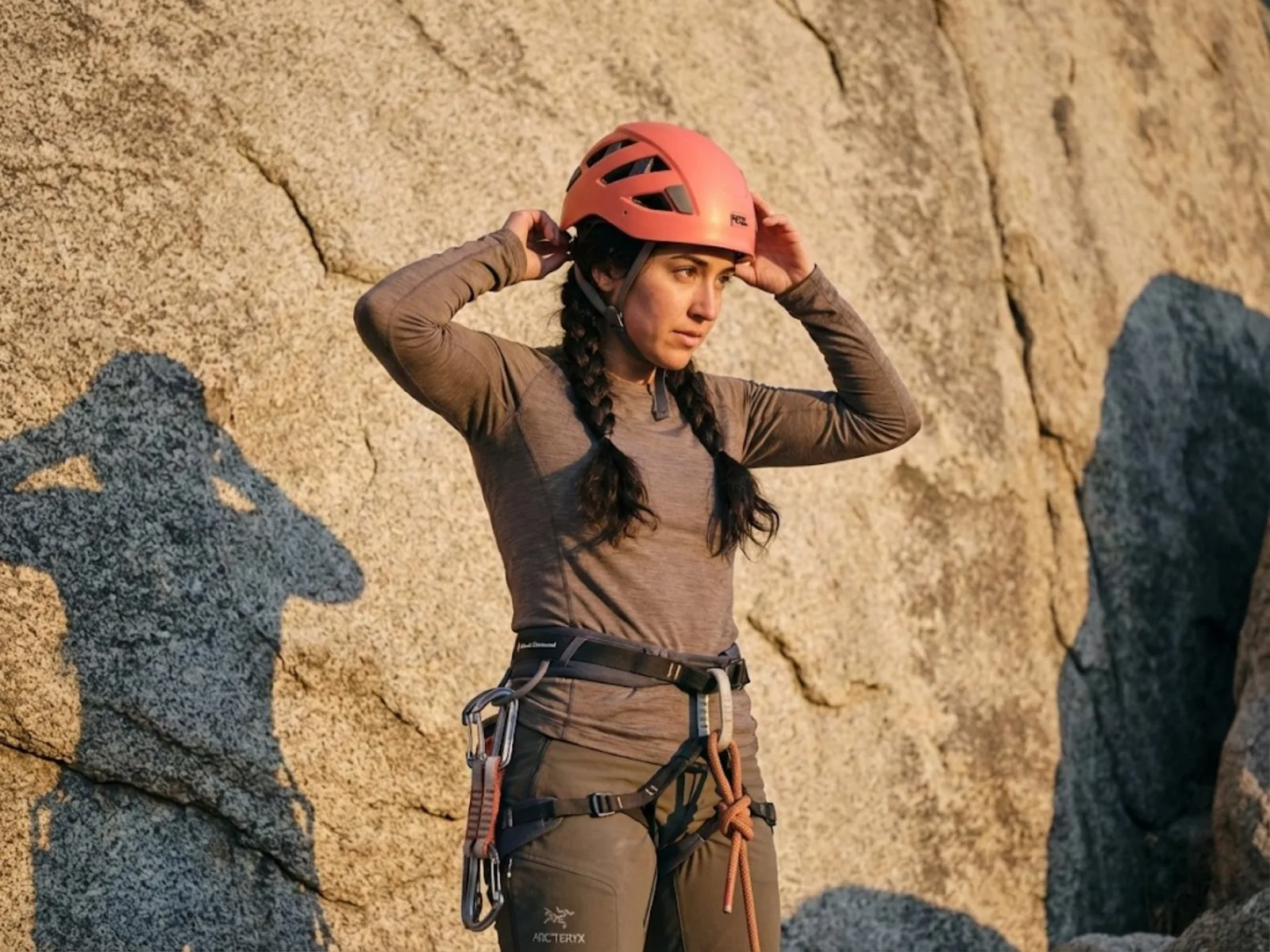
The helmet slid forward, exposing my forehead, as I leaned back to clip the third bolt. My ponytail had pushed it up—again. I’d already adjusted the straps twice that morning, but the standard “one size fits most” suspension system wasn’t built for my hair volume. That’s when I realized: a helmet that doesn’t fit isn’t just uncomfortable—it’s a liability.
After guiding climbers through Yosemite and Moab for over a decade, I’ve seen every fit problem imaginable. Helmets that wobble on large heads. Rigid foam pressing braids into scalps. Hijabs displacing suspension systems. The truth is, EN 12492 certification means a helmet passed safety tests—but it says nothing about whether it’ll fit your head.
Here’s how to select a climbing helmet that accommodates your specific head shape, hair volume, and climbing style—ensuring both safety and comfort.
⚡ Quick Answer: The best climbing helmet is one that stays securely positioned on your head without pressure points. Measure your head circumference, identify your hair volume needs (ponytail cutout, dreadlock accommodation, hijab compatibility), match the helmet archetype to your climbing style (hardshell for durability, shelled foam for all-around use, monocoque foam for ultralight), and verify fit using the two-finger chinstrap test and shake test before purchase.
Understanding Safety Standards: What the Certifications Actually Mean

Walk into any climbing specialty store and you’ll see helmets stamped with EN 12492, UIAA 106, or CE certification. These aren’t marketing buzzwords—they’re the difference between a helmet that protects you and one that fails when it matters.
EN 12492 is the baseline European standard for mountaineering helmets. It requires helmets to limit force transmission to 10 kiloNewtons (kN)—roughly 2,250 pounds of force, the threshold where your neck and spine start taking serious damage.
The standard now includes off-axis impact testing for the front, rear, and sides, forcing manufacturers to extend foam coverage. This is why modern helmets sit lower and feel more snug than older models.
UIAA 106 is stricter. The International Climbing and Mountaineering Federation limits force transmission to 8kN—20% less than EN 12492.
Here’s what most climbers don’t know: the chin strap release force is completely different between climbing helmets and industrial safety helmets. EN 12492 requires retention systems to withstand at least 500 Newtons without releasing. Industrial helmets (EN 397) must release at 150-250N to prevent strangulation if snagged in machinery.
This retention difference is why proper helmet selection matters as much as knowing how to test handholds for stability before committing weight—both are fundamental safety protocols for technical terrain.
Pro tip: Never use an industrial hard hat for climbing. The chin strap will pop off on the first impact, leaving your head unprotected for subsequent hits during a tumbling fall.
A helmet that passes all tests but doesn’t fit your head properly can still slide off during impact, rendering the EN 12492 impact testing protocols meaningless. Fit is the primary safety feature.
The Material Science of Helmet Construction
ABS vs. Polycarbonate: Shell Materials Decoded
ABS (Acrylonitrile Butadiene Styrene) is the workhorse of the industry—highly impact-resistant and scratch-proof, but heavy at 300g+. The Black Diamond Half Dome and Petzl Boreo use ABS shells that sit higher on the head. If you have high-volume hair or a large head, this extra height can push the helmet up and expose your forehead.
Polycarbonate is lighter and stronger per unit of thickness. High-end shelled foam helmets like the Black Diamond Vapor and Petzl Meteor use thin PC shells that sit lower and more snug. PC allows transparency for foam inspection but scratches more easily. The material properties of ABS and polycarbonate show PC handles temperature extremes better (-40°C to 130°C), critical for alpine mountaineering.
EPP vs. EPS Foam: The Crumple Zone Explained
EPS (Expanded Polystyrene) is a sacrificial absorber—upon impact, cells collapse permanently. Once crushed, it cannot absorb energy again. EPS is rigid and brittle.
EPP (Expanded Polypropylene) behaves elastically, compressing under impact then rebounding to its original shape. This allows multi-impact capability. EPP is softer and more forgiving.
Climbers with dreadlocks or braids report that EPP helmets like the Petzl Sirocco and Mammut Wall Rider don’t press individual braids into the scalp, preventing pressure headaches. EPP helmets cost more ($140+) but handle daily abuse better. The EPP versus EPS foam energy absorption mechanics explain why EPP is becoming the standard for premium climbing helmets.
UV Degradation: The Silent Killer
Climbers receive UV doses up to 3x the recommended limit per weekend. Nylon webbing in chin straps can lose over 50% of tensile strength after 3 years of heavy sun exposure.
Fading is a late-stage sign—significant weakening occurs before color changes appear. If the shell feels “chalky” or webbing feels “crispy,” the gear is unsafe. In high-altitude or desert environments, helmet lifespan drops to 2-3 years (vs. 5 years standard, 10 years maximum).
Pro tip: Store your helmet in a dark gear bag, not hanging in your garage window. UV damage is cumulative and irreversible.
The UV radiation effects on nylon webbing strength show that even helmets that look fine can have compromised retention systems.
Anthropometric Fit: Solving the “Big Head” and High-Volume Hair Problem
Cranial Circumference: Beyond “One Size Fits Most”
The climbing helmet market is optimized for 52-58cm head circumference. If your head measures >61cm, options are limited.
The Grivel Salamander 2.0 (61cm) and Smith Summit MIPS (63cm+) are among the few large-head options. Measure circumference at the widest part of your head (1 inch above eyebrows). If you’re between sizes, always size up—you can tighten the BOA adjustment system, but you can’t expand a too-small helmet.
The Ponytail Problem: Engineering Solutions for High-Volume Hair
Traditional suspension systems run a plastic band where a ponytail sits. To avoid the band, climbers wear the ponytail high, which pushes the helmet up, exposing the forehead—the “mushroom effect.”
The Petzl Borea features the OMEGA headband with a pronounced notch for ponytails. The Black Diamond Half Dome (Women’s) has deeper rear coverage. Extremely thick ponytails may require adjustment to a lower nape position.
Dreadlocks, Braids, and Textured Hair: The EPP Advantage
Dreadlocks add both circumference and irregular surface texture. Rigid EPS foam helmets can press individual braids into the scalp, causing headaches after just a few pitches.
The softer, more flexible nature of EPP foam (Petzl Sirocco, Mammut Wall Rider) is more forgiving on textured hair than rigid EPS shells. Climbers with dreads often need to size up to the largest available helmet (L/XL), but this creates a secondary risk—if volume is filled by hair but the mass of the head is smaller, the helmet can wobble.
Using a thin spandex cap or “Buff” compresses the hair and provides a smoother surface for the MIPS technology layer or suspension system to glide over, preventing snagging.
Pro tip: If you’re wearing a helmet with rotational impact protection, the low-friction MIPS layer can snag on textured hair. Use a silk cap to prevent this issue.
Hijab Compatibility: Fabric Slippage and Safety Protocols
A standard hijab knot or bun can displace the helmet, creating a dangerous gap between the helmet and skull. Sports hijabs (Nike, Outdoor Research, Sweaty Betty) are made of thinner, breathable materials that fit closer to the skull, allowing for a safer helmet fit.
Loose ends of the hijab must be strictly tucked inside clothing to prevent them from getting caught in a belay device or rappel device—this presents a strangulation hazard. Ensure the chin strap sits below the jaw, not on the fabric of the hijab, to maintain proper retention force.
Pro tip: Test your setup at ground level before climbing. Shake your head vigorously side-to-side and up-down. If the helmet shifts more than 1 inch, readjust.
The Three Helmet Archetypes: Matching Construction to Climbing Style
The Hardshell (The Tank): Durability Over Weight
Hardshell helmets feature a thick ABS shell with a small EPS foam puck glued into the crown. The Black Diamond Half Dome, Petzl Boreo, and Grivel Salamander 2.0 are the archetypes.
Weight: 300g+. Durability: extreme. These helmets can withstand being sat on, dropped, stuffed in luggage, and still maintain structural integrity. The trade-off? Less ventilation than foam helmets—they can be uncomfortably hot on summer sport climbing days. But at $60-$70, they’re the most affordable option.
Ideal for: Beginners, group use (guide services, climbing gyms), trad climbing with high rockfall protection risk, caving, multi-pitch climbing where durability matters more than weight.
The Shelled Foam (The Hybrid): The All-Arounder
Shelled foam helmets use a thin polycarbonate shell fully covering an EPS or EPP foam liner. The Black Diamond Vision, Petzl Meteor, and Mammut Crag Sender are the standard bearers.
Weight: 200-250g—a significant reduction from hardshells. Better ventilation due to larger vent holes integrated into the foam. The thin PC shell can dent or crack if packed poorly, so these require a helmet bag or dedicated compartment.
Price: Mid-range ($100-$130). Ideal for: All-around climbing, alpinism, multi-pitch where weight matters but durability is still needed.
Pro tip: If you’re flying with a shelled foam helmet, pack it in the center of your bag surrounded by soft clothing. I’ve seen too many cracked shells from baggage handlers.
The Monocoque Foam (The Ultralight): When Every Gram Counts
Monocoque foam helmets are entirely molded EPP or EPS foam with minimal or no outer shell. The Petzl Sirocco (165g) and Black Diamond Vapor (180g) are the lightest-weight helmets on the market.
EPP models (Sirocco) can survive minor deformations without cracking—more resilient than EPS monocoque designs. But cosmetic damage is inevitable.
Price: Most expensive ($140-$170). Ideal for: Hard sport climbing (where rockfall is minimal), fast-and-light alpinism, climbers with neck pain issues who need minimal weight.
MIPS Technology: Is Rotational Impact Protection Worth the Trade-offs?
Angled impacts (like a climber swinging into a wall during a pendulum fall) generate rotational forces. Standard EN 12492 tests only measure linear force from vertical rockfall.
MIPS (Multi-directional Impact Protection System) uses a low-friction layer that allows the helmet to slide 10-15mm relative to the head during an angled impact, reducing rotational motion transferred to the brain. This is protection against climber falls, not just rock falls.
The trade-offs: Adds 20-30g of weight, increases cost by $20-$40, and can reduce breathability. The MIPS layer can snag on high-volume or textured hair—some climbers report discomfort or need to use a cap/buff as a barrier.
When it matters most: Sport climbing, gym climbing, and alpine mountaineering where lead falls are common. When it matters least: Pure trad climbing or caving where the primary threat is vertical rockfall (linear impact).
The Mammut Wall Rider MIPS and Black Diamond Vision MIPS are the top-performing helmets in this category. The Smith Summit MIPS offers triple-certified protection (climbing, skiing, cycling) for mountain adventures that cross disciplines.
Pro tip: If you’re primarily a trad climber in areas with loose terrain like the Gunks or Indian Creek, save your money and skip MIPS. Invest in a more durable shell instead.
Fit Testing Protocol: The Two-Finger Rule and Shake Test
Before you buy, verify the helmet fits correctly using these field-tested methods.
The two-finger rule: With the helmet on and chin strap fastened, you should be able to fit two fingers (stacked) between the strap and your chin. Tighter risks discomfort on long climbs. Looser risks the helmet sliding off.
The shake test: With chin strap fastened, shake your head vigorously side-to-side and up-down. The helmet should move less than 1 inch relative to your skull. If it shifts more, tighten the retention system or try a different size.
The push test: Push the helmet forward and backward. It should not expose more than 1 inch of forehead or slide past the occipital bone (the bump at the back of your skull).
Pressure point check: Wear the helmet for 10 minutes. If you feel concentrated pressure at temples, crown, or rear, the internal shape doesn’t match your head geometry. Try a different brand—Black Diamond, Petzl, Mammut, Grivel, and Edelrid all have slightly different internal shapes.
The chin strap should form a “V” shape that meets just below your ears. If it sits too far forward or back, the retention geometry is wrong and the helmet won’t stay in place during a fall.
Proper fit is just as critical as distributing pack weight to your center of gravity—both prevent injury through biomechanical optimization.
Lifecycle Management: Inspection, Retirement, and the 10-Year Rule
When to Retire Your Helmet: The Non-Negotiable Criteria
Manufacturers like Black Diamond and Petzl state a maximum shelf life of 10 years for plastics from date of manufacture (stamped inside the shell). With regular use, this drops to 5 years. In high-altitude or desert environments, lifespan can drop to 2-3 years due to UV intensity.
Retire immediately if:
- Helmet has sustained a severe blow (even if no external damage is visible—the foam may be crushed internally)
- Chin strap webbing is torn, burnt, or heavily faded
- Buckle is cracked or deformed
- Foam liner is loose, dented, or detached from shell
- Shell has visible cracks or deep gouges
The “it looks fine” fallacy kills climbers. EPS foam can be crushed internally without external signs. If you took a significant impact, retire the helmet regardless of appearance.
Pro tip: Write the purchase date inside your helmet with a permanent marker. It’s easy to forget when you bought it, and the manufacture date stamp can be hard to find.
The climbing gear retirement criteria from REI provides additional guidance on when to replace your helmet and other safety equipment.
Inspection Protocol: What to Check Before Every Climb
Shell inspection: Look for cracks, deep scratches, or deformation. Press on the shell—if it crunches or feels loose, the foam has detached.
Foam inspection: If you have a transparent PC shell, visually inspect the foam for cracks, compression marks, or delamination.
Webbing inspection: Check chin strap for fraying, cuts, or stiffness. Pull on the webbing—it should feel supple, not crispy or brittle.
Buckle inspection: Ensure the buckle clicks securely and doesn’t have cracks or sharp edges.
Chemical contamination warning: Never apply stickers, paint, or marker ink to a helmet unless explicitly approved (water-based adhesives only). Solvents in standard adhesives can cause “crazing” (micro-cracks) in polycarbonate and ABS.
If you’re buying used hiking gear, inspect helmets extra carefully for chemical damage, hidden cracks, and proper age documentation.
The Petzl helmet inspection guidelines provide detailed visual inspection protocols for identifying structural compromise before it becomes a safety issue.
Conclusion
Choosing a climbing helmet that “actually fits” isn’t about finding the most expensive model or the lightest option. It’s about matching anthropometry (your head shape and hair volume), activity (sport vs. alpine), and risk tolerance (weight vs. durability).
For high-volume hair, prioritize the Petzl Borea (OMEGA headband) or Black Diamond Half Dome Women’s (ponytail-optimized shell). If you have dreadlocks or braids, choose EPP foam helmets like the Petzl Sirocco or Mammut Wall Rider for softer contact. For large heads (>61cm), seek out the Grivel Salamander 2.0 or Smith Summit MIPS. For safety maximizers, choose UIAA 106 certified helmets with MIPS to mitigate both force transmission and rotational injury.
If you’re transitioning from hiking to peak bagging, a helmet becomes non-negotiable gear—Class 3+ terrain demands head protection for rockfall and fall consequences.
Before your next climb, take 10 minutes to properly fit-test your helmet. A helmet that fits correctly will be comfortable enough to wear all day—and that’s the helmet that will actually protect you when it matters.
FAQ
What is the difference between a climbing helmet and an industrial hard hat?
The chin strap release force. Climbing helmets (EN 12492) must withstand at least 500N without releasing to stay on during tumbling falls. Industrial helmets (EN 397) must release at 150-250N to prevent strangulation if snagged in machinery. Using an industrial helmet for climbing is dangerous—it will pop off on the first impact.
How long do climbing helmets last?
Maximum 10 years from manufacture date (stamped inside the shell), but with regular use, helmets should be retired after 5 years. In high-UV environments (high altitude, desert), lifespan drops to 2-3 years. Retire immediately after any significant impact, even if no damage is visible.
Can I use a cycling helmet for climbing?
No. Cycling helmets are certified to different standards (EN 1078) which test for different impact scenarios (pavement falls) and lack the penetration resistance and side or rear coverage required for rockfall protection. Climbing helmets must meet EN 12492 or UIAA 106 standards.
Is MIPS worth the extra cost for climbing helmets?
It depends on your climbing style. MIPS reduces rotational forces during angled impacts (like swinging into a wall during a lead fall), making it valuable for sport climbing and gym climbing. For pure trad climbing where the primary threat is vertical rockfall (linear impact), MIPS offers no additional benefit. Weigh the $20-$40 cost increase and 20-30g weight penalty against your specific risk profile.
How should a climbing helmet fit?
The helmet should sit level on your head (not tilted back), covering your forehead down to about 1 inch above your eyebrows. The chin strap should form a V meeting just below your ears, with two fingers of space between strap and chin. When you shake your head vigorously, the helmet should move less than 1 inch relative to your skull.
Risk Disclaimer: Hiking, trekking, backpacking, and all related outdoor activities involve inherent
risks which may result in serious injury, illness, or death. The information provided on The Hiking Tribe is for
educational and informational purposes only. While we strive for accuracy, information on trails, gear, techniques,
and safety is not a substitute for your own best judgment and thorough preparation. Trail conditions, weather, and
other environmental factors change rapidly and may differ from what is described on this site. Always check with
official sources like park services for the most current alerts and conditions. Never undertake a hike beyond your
abilities and always be prepared for the unexpected. By using this website, you agree that you are solely
responsible for your own safety. Any reliance you place on our content is strictly at your own risk, and you assume
all liability for your actions and decisions in the outdoors. The Hiking Tribe and its authors will not be held
liable for any injury, damage, or loss sustained in connection with the use of the information herein.
Affiliate Disclosure: We are a participant in the Amazon Services LLC Associates Program, an
affiliate advertising program designed to provide a means for us to earn advertising fees by advertising and linking
to Amazon.com. As an Amazon Associate, we earn from qualifying purchases. We are also an official affiliate partner
of Black Diamond Equipment via the AvantLink network. If you click on a Black Diamond affiliate link and make a
purchase, we may earn a commission at no additional cost to you. We also participate in other affiliate programs and
may receive a commission on products purchased through our links. Additional terms are found in the terms of
service.